
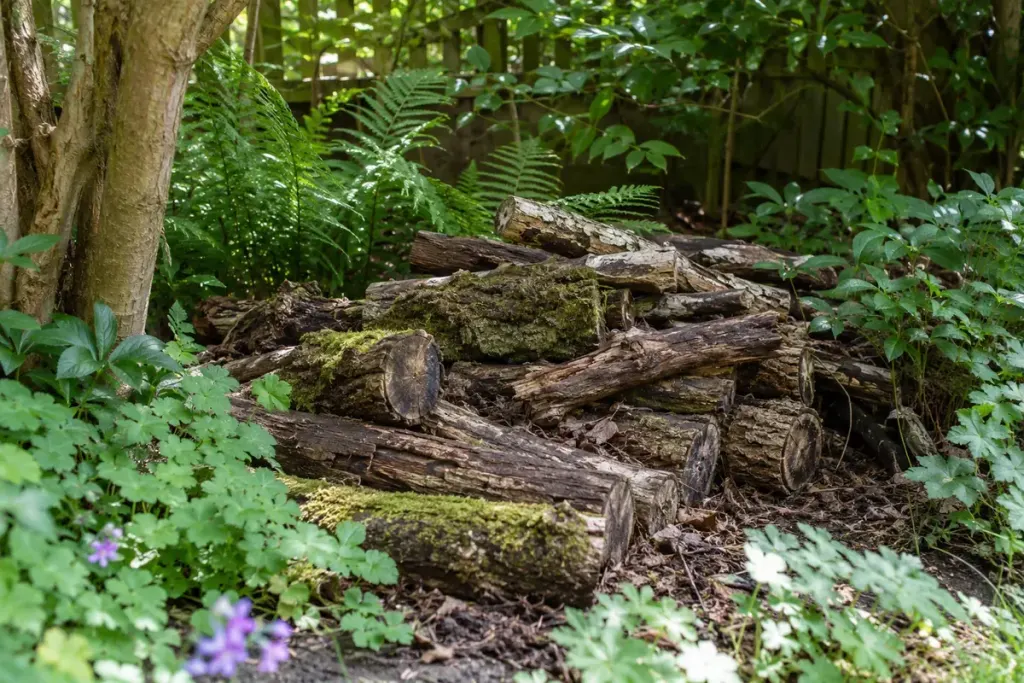
A tidy outdoor space does not need to be empty of decaying wood. A modest pile of suitable logs or branches can provide habitat while remaining deliberately placed and manageable. The important decision is where it belongs, not how large a pile you can build.
The Royal Horticultural Society’s dead-wood habitat guidance explains its value for wildlife. The RSPB’s log-pile activity offers a practical starting point for creating a small feature.
Choose the site before collecting material
Use a place where the wood will not block a path, drain, access route or required maintenance. In a shared garden, discuss the location with the people responsible for the land. A habitat feature should not create a hidden trip hazard or make essential work difficult.
Consider the site’s conditions and intended use. A quiet corner may be more suitable than a narrow entrance used daily. Keep the pile stable and modest; a community activity should not become an improvised climbing structure.
Use material with a known origin
Suitable prunings or untreated wood already available on the site may be useful. Do not remove dead wood from woodland or other habitats to create a new pile elsewhere. Avoid treated timber and material whose condition or origin raises concerns.
If a tree has disease or pest issues, seek appropriate local advice about handling its material rather than automatically moving it around the garden.
- Agree who will maintain the surrounding path.
- Explain the purpose with a small, readable sign if useful.
- Observe wildlife without repeatedly dismantling the pile.
- Review stability and access as the material breaks down.
A well-chosen habitat feature can be small and unobtrusive. Its success depends on remaining suitable for both the wildlife using it and the people caring for the wider space.