
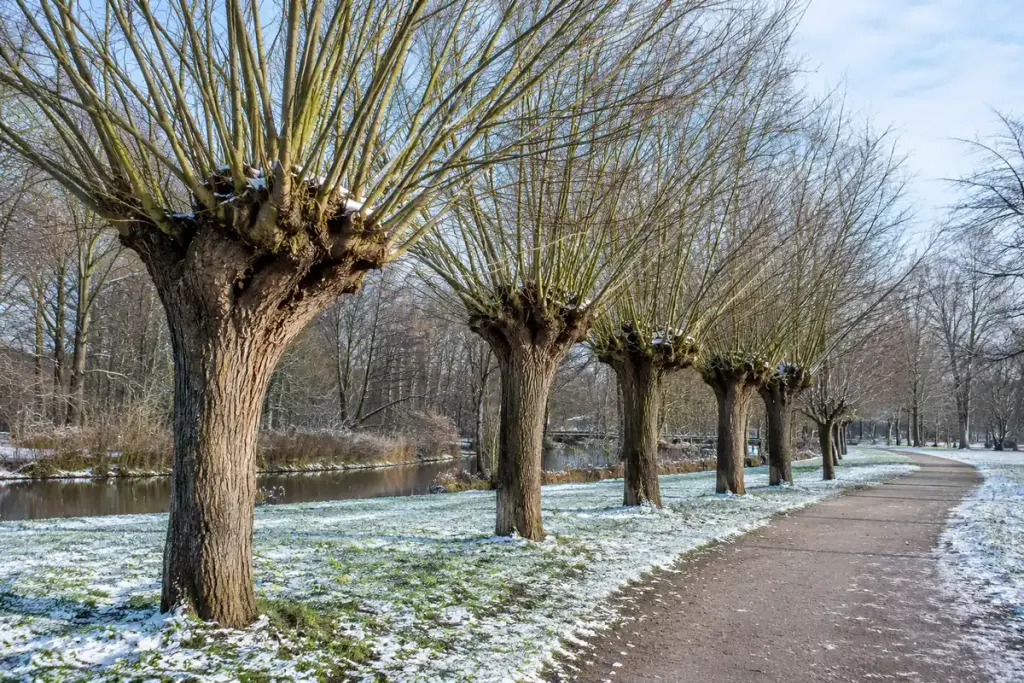
A row of winter trees with rounded heads and upright young shoots can look severe until you understand the repeated management behind it. Pollarding is a cycle. It is not simply a name for cutting a large tree down to whatever height seems convenient.
The Royal Horticultural Society’s pollarding guidance describes starting the technique at an appropriate stage and continuing the pruning cycle on suitable trees. The method is used to manage size and growth in particular settings. Species, condition, timing and previous management all matter.
Read the history before proposing the work
An established pollard has developed through repeated cutting at its heads. A mature tree with no such history presents a different situation. Calling a one-off drastic reduction “pollarding” does not establish that the tree can tolerate it or that the result will be safe.
For a community site, begin with records: when was the tree last assessed, what work was specified, and who carried it out? Photographs from several years can help show the management cycle, but they do not replace a professional inspection.
If a pollard has been neglected for a long period, do not assume the old routine can simply be resumed in one operation. The RHS discusses the complications of restoring lapsed pollards. A qualified arborist should assess the tree and explain the proposed approach.
Budget for the cycle, not just the first visit
A small management note should identify the responsible organisation, the agreed review interval and the next decision date. Ask what access the contractor needs and how work will account for wildlife, public use and relevant legal protections.
This is also a useful moment to distinguish the reason for the work. Is the aim to continue an established management form, address a specific risk or solve a space conflict? Those questions should be answered before a cutting method is selected.
For visitors, a short sign can explain that the trees are managed on a cycle and give a contact for concerns. Avoid promising that every apparently bare crown will respond identically. Living trees and sites vary.
People can help by reporting new damage or a change in condition from a safe public area. Climbing, cutting and work near power lines belong to appropriately trained professionals.
Pollarding makes most sense when seen across years. Its distinctive shape is a record of continuing decisions, and its future depends on keeping those decisions informed and funded.