
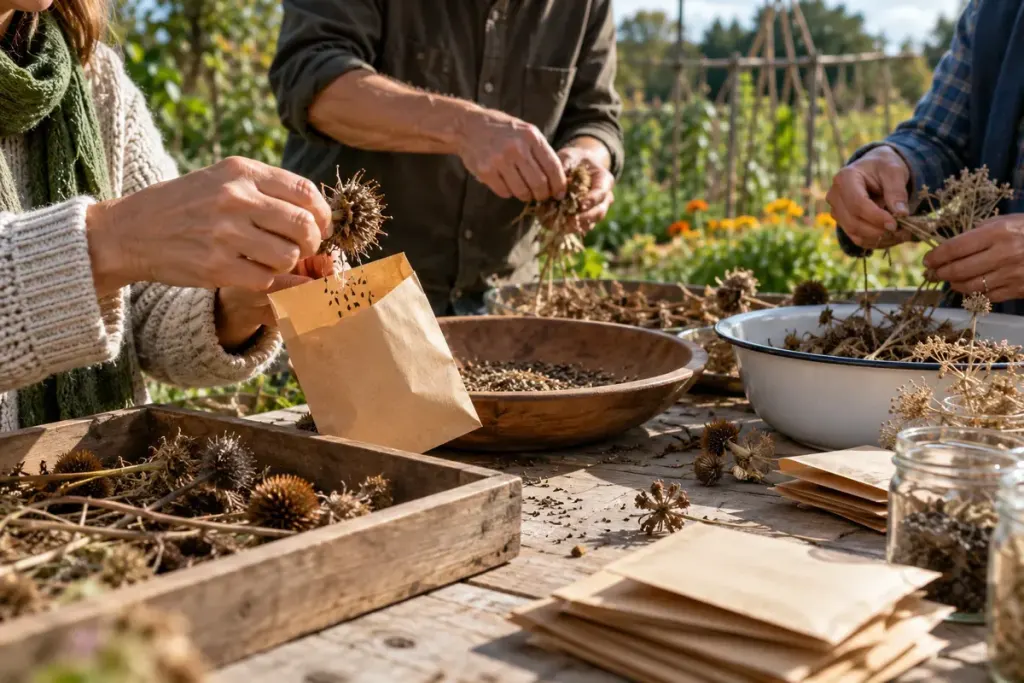
A seedhead can look finished before the seed inside is ready. Collecting everything on one convenient afternoon may therefore give you a mixed batch: some mature seed, some empty husks and some material that still needs time on the plant.
Begin with a plant you can identify confidently in a garden where you have permission to collect. Learn what ripeness looks like for that species. The RHS guide to collecting and storing seed recommends collecting ripe seed on a dry day, then preparing and storing it appropriately. Species differ, so this is not a rule that every seed can be dried and kept in the same way.
Separate collecting from packing away
For suitable dry-stored garden seed, allow collected material to dry in an airy place before final storage. Remove unwanted plant debris carefully and keep batches separate. The RHS seed-collection leaflet warns that inadequately dried seed can become mouldy. Sealing damp material in a jar is not a shortcut.
Dry seed can be placed in labelled paper packets within an appropriate cool, dry storage arrangement. Check species-specific instructions for exceptions and expected storage life. Some plants produce offspring that differ from the parent, so a saved packet should not promise an identical flower or crop.
Keep a small collection record
Write the plant name, collection date and location as you work. Add a brief observation such as “seed released easily from the dry pod” rather than an unsupported claim of guaranteed germination. If the identification is uncertain, do not distribute the packet as a named variety.
For a community plot, assign one tray and label per batch before several volunteers begin collecting. That simple arrangement prevents a careful morning’s work from becoming an anonymous mixture. Leave some seedheads where appropriate for wildlife and avoid stripping plants unnecessarily.
Next season, note what was sown and what emerged. A successful tray is useful feedback, but it does not prove that all packets remained viable. The aim is a repeatable garden skill: recognising readiness, keeping moisture under control and preserving enough information to learn from the result.