
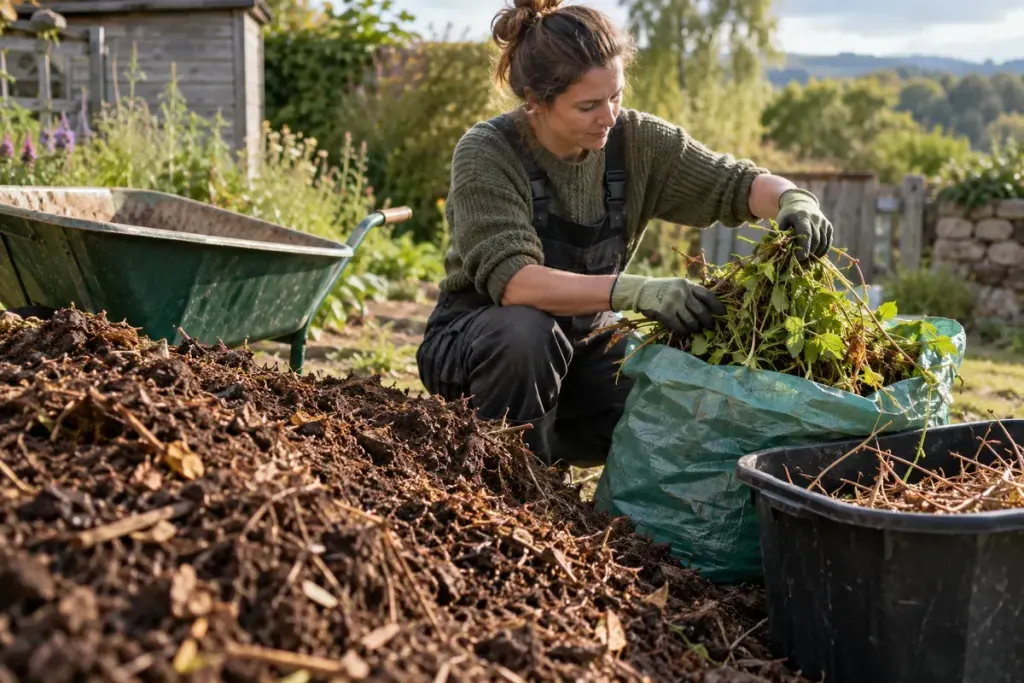
A garden-clearance day can move a problem as easily as remove it. Cuttings, roots and soil from an invasive plant may carry it to a compost heap, a roadside or another garden if the waste is handled without a plan.
Before volunteers start pulling or cutting, identify the plant and the rules that apply locally. “Not native” and “invasive” are not interchangeable labels, and a photograph alone may be insufficient for confident identification.
England’s official invasive-plant guidance describes risks from moving plant material and contaminated soil, along with controls on treatment and disposal. It applies to England. Other places have their own regulated species and approved routes.
Ask the relevant local authority or a qualified specialist what the identified material requires. Do not assume that a household green-waste collection, a shared compost bin or an ordinary garden contractor accepts it.
If identification is uncertain, postpone that part of the clearance rather than bagging everything together. Some plants also pose direct handling hazards. Volunteers should not be asked to experiment with removal methods they have not been trained to use.
Give the group a clear boundary
A briefing can identify the area to leave undisturbed, the person coordinating advice, and the work volunteers can safely do elsewhere. Keep suspect material separate under the agreed procedure, and prevent well-intentioned participants from taking cuttings home.
Record the species identification, advice received, date, contractor or disposal route, and any follow-up required. A photograph of an empty patch is not proof that a persistent plant has been eradicated. Future checks may be part of the control plan.
Avoid making public claims that a neighbouring property is the source without evidence. Concentrate on managing the material within the project’s responsibility and communicating verified information.
The useful result is not simply fewer plants by the end of the afternoon. It is a clearance that does not distribute viable material elsewhere and leaves the next group with a reliable record of what was done.