
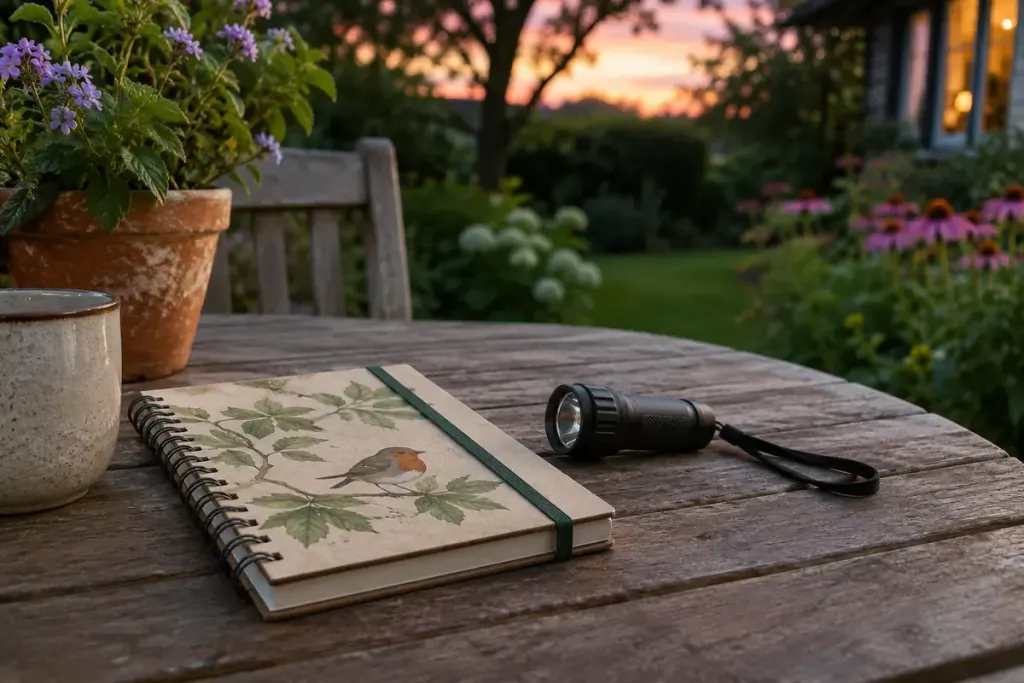
A community moth evening can encourage people to look closely at wildlife they usually miss. It also introduces artificial light into the place being studied. That makes the lighting plan part of the activity, not an afterthought.
Butterfly Conservation’s light-pollution guidance recommends reducing unnecessary light, limiting its duration and directing it appropriately. A planned recording session should not become a reason to leave additional garden lights running every night.
Agree the purpose and the end of the session
Work with a knowledgeable local recorder to choose a suitable method and location. Confirm landowner permission, who will supervise the activity and when equipment will be checked and removed. Consider nearby homes and wildlife areas as well as the convenience of the meeting point.
A beginner group can also observe at dusk or use an organised demonstration. Not every activity requires buying and operating a light trap. Match the method to the group’s experience and the information it intends to record.
Put welfare in the practical checklist
Butterfly Conservation’s recording guidance covers electrical safety, hot or bright bulbs and careful treatment of moths. Use suitable equipment and avoid touching wings. Ask the experienced recorder to explain handling and release arrangements before participants begin.
Record the date, location, method and identification confidence. A doubtful identification can remain doubtful until checked; the activity does not become more valuable by assigning a confident name to every photograph.
At the end, confirm that the planned checks and releases have been completed and the additional lights are off. Review whether the session produced useful observations with acceptable disturbance. That gives the group a better basis for its next activity than simply counting how brightly the garden was lit.