
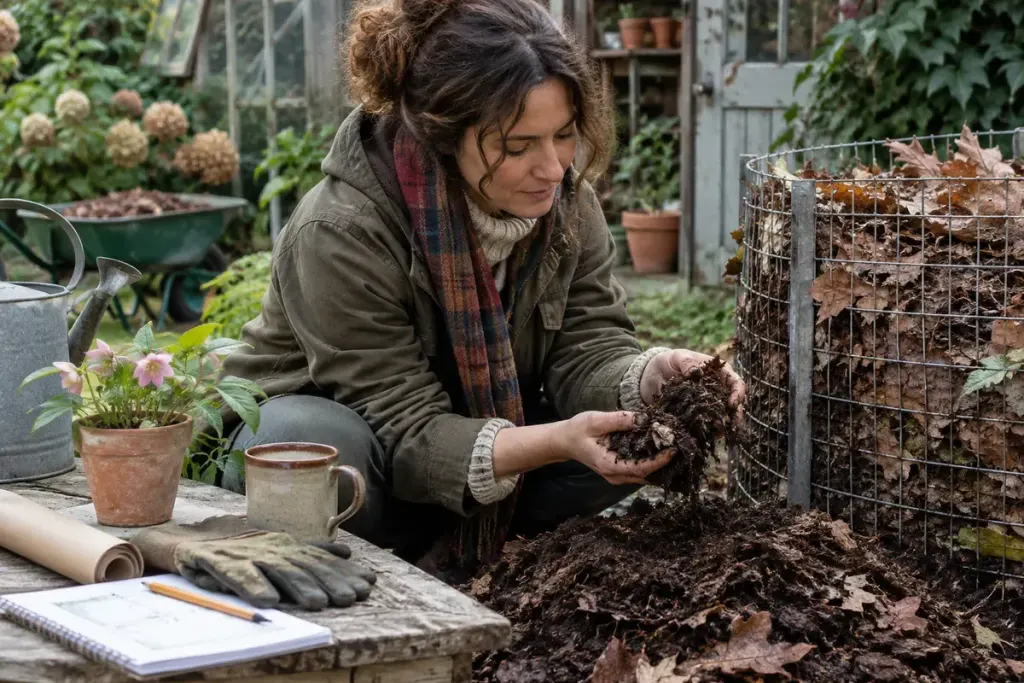
A community garden can gather a surprising volume of autumn leaves. Giving them a separate place to break down can create leaf mould, but it helps to label the project accurately: the result is not simply a fast substitute for every use of garden compost.
The RHS describes leaf mould as decayed leaves used as a soil conditioner and mulch. Different leaves break down at different rates, and some tougher material benefits from different handling.
Give the leaf collection a clear job
Decide where the finished material will be used before volunteers start filling the container. Improving soil structure, mulching a suitable bed and preparing a particular potting mix are different tasks. Do not label unfinished leaves “ready compost” simply because the collection area is full.
Keep the leaf stream free of litter and unsuitable additions. A brief sign naming accepted material is more useful than an unqualified invitation to bring “garden waste.” Check local guidance where plant disease or contaminated material is a concern.
Record enough to learn from the pile
Mark when a batch was started and broadly what went into it. During routine checks, note whether the material is drying out, remaining recognisable or developing the crumbly condition expected for its intended use. Follow suitable horticultural guidance rather than promising a fixed completion date to every donor.
For a small comparison, keep two labelled samples from different batches and inspect them at the same time. This can help volunteers understand why one batch is ready for one job while another needs longer.
The RHS’s container-growing guidance uses leaf mould and garden compost as separate ingredients in example mixes. That is a useful reminder that these materials can contribute different properties rather than being interchangeable bags of “soil.”
Assign responsibility for the collection area, including safe access and keeping paths clear. A modest, well-managed leaf project can be easier to sustain than an oversized heap with no owner. Its success is a material the garden can use confidently, with a process volunteers understand and can repeat next season.