
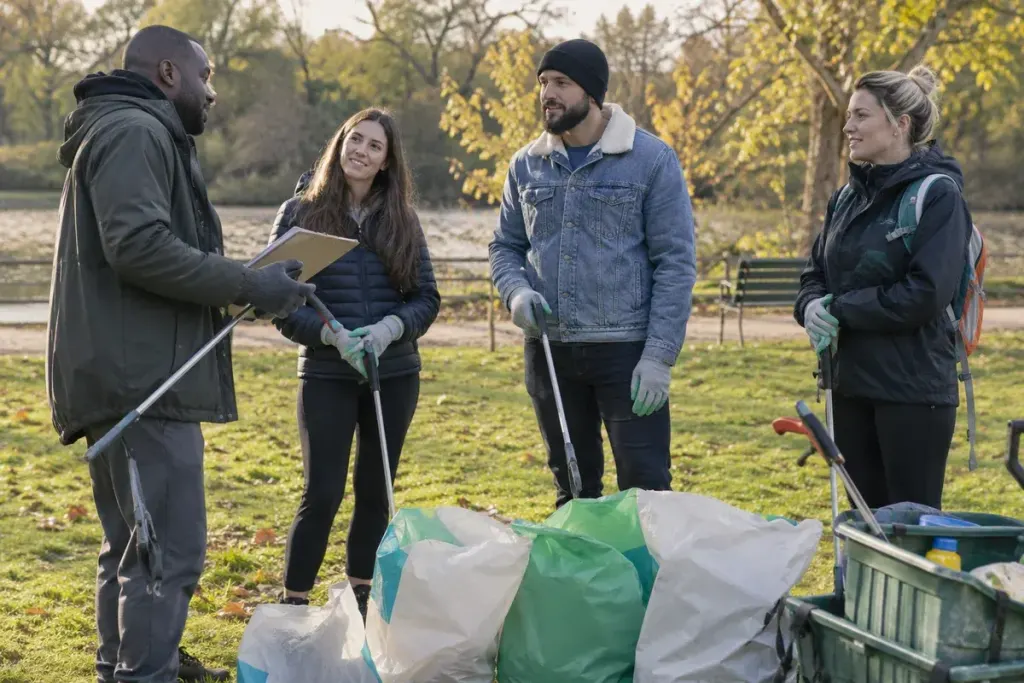
The volunteers have arrived, the bags are full and the group photograph looks excellent. Then someone asks who is collecting the waste. A clean-up is not finished when rubbish has merely moved from a path into bags beside an overflowing bin.
Waste handling belongs in the first planning conversation. The collection arrangement influences the route, equipment and amount the group can responsibly gather.
Agree the destination before inviting volunteers
Contact the landowner or responsible local authority about permission, collection and accepted waste types. Confirm the collection point and timing in writing where possible. Do not assume household recycling rules apply to mixed material found outdoors.
Keep Britain Tidy’s practical guidance recommends arranging collection for larger picks and identifies material volunteers should avoid, including clinical waste, hazardous objects and heavy items. Adapt the event to local instructions rather than transferring one country’s collection arrangements to another.
Define the work volunteers are actually doing
A short route with clear boundaries is easier to manage than “clean the whole area.” Identify places outside the activity, such as unsafe banks, busy roads or derelict structures. Explain who to contact when an unsuitable item is found.
Use appropriate litter-picking equipment, gloves and footwear, and provide a way to wash hands. Children and people requiring support need suitable supervision. The organiser should assess the site and follow applicable safety arrangements; enthusiasm does not remove environmental hazards.
Record a hazard instead of handling it
A volunteer who leaves a needle or unknown chemical container alone has made a useful decision. Mark its location for the responsible service without touching or disturbing it. Keep other people away where this can be done safely.
Give the reporting lead a simple note format: location, description, time and the service notified. Avoid photographs that unnecessarily identify passers-by or expose private information.
Close the collection loop
Count bags only if that is a meaningful measure for your event, and distinguish collected material from material awaiting removal. Someone should confirm that the agreed collection happened. If it did not, follow up with the responsible contact rather than leaving volunteers to guess.
Afterwards, share one practical result and one lesson: perhaps the route was accessible but the collection point was too far from it. A modest, accurate record helps the next group improve. It also makes clear that the goal was a cleaner, safer place, not simply a larger pile of bags.