
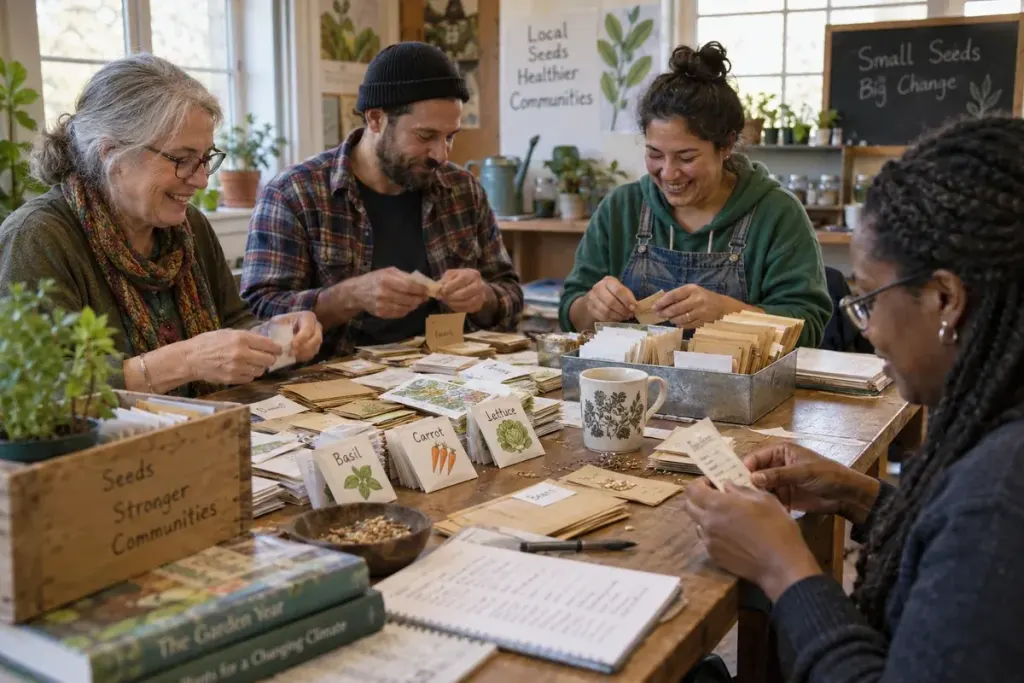
A handful of seeds can be a generous gift and an unsolved puzzle. Without a label, the next gardener may not know what they are planting, when it was collected or whether the description is certain. A seed swap works better when information travels with the envelope.
Set a simple labelling standard before the event. Ask contributors to include the plant’s known name, variety if known, collection or purchase year and whether the seeds were bought or saved. If a detail is uncertain, write “unknown” instead of guessing.
Share experience without turning it into a guarantee
A short growing note can be helpful: “grown in a sheltered container” or “collected from our community plot.” Keep that observation separate from claims about disease resistance, germination or future yield. Seeds that performed well in one garden may face different conditions elsewhere.
The RHS guidance on saving and sharing seeds offers a practical reference for community exchanges. Use reputable horticultural advice for species-specific saving and storage questions rather than relying on a handwritten promise.
At the table, group clearly identified seeds separately from uncertain contributions. Do not distribute material that cannot be identified safely or that may be restricted locally. Check relevant rules before moving seeds across borders; a friendly exchange does not remove plant-health requirements.
Make participation easy for newcomers
Provide spare envelopes, pens and a visible sample label. Volunteers can help people complete missing information without making them feel that their contribution is unwelcome. Offer modest portions so more participants can try a plant and fewer leave with quantities they cannot use.
- Keep a space for questions away from the busiest exchange point.
- Explain whether taking seeds without contributing is welcome.
- Give beginners a route to reliable sowing instructions.
- Agree what happens to leftover packets after the event.
A brief follow-up can improve the next swap. Ask participants which labels were useful and what information they wished they had received. Avoid presenting a few successful photographs as proof that every packet germinated well.
The value of a seed swap is not measured only by how many envelopes disappear. It also lies in whether a neighbour can open one later, understand what is inside and make a sensible start. A clear label is a small part of that shared responsibility.