
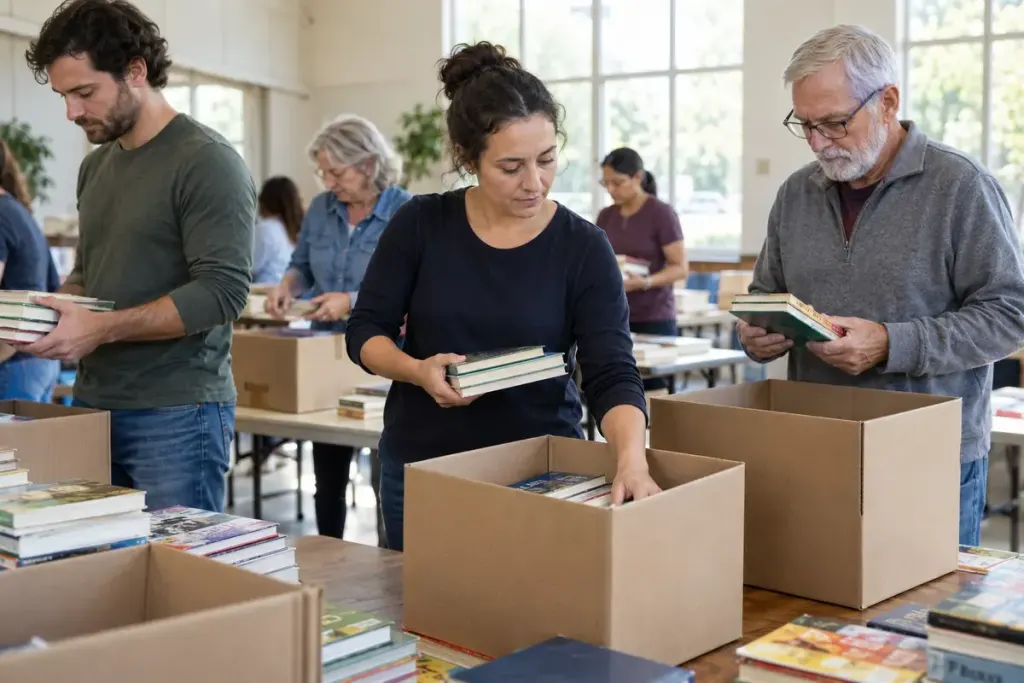
A box of books can be generous and still create work for the receiving school. Outdated materials, damaged pages, or books in the wrong language may need sorting and disposal before anything reaches a reader. Start with the school’s request rather than the contents of the donor’s shelf.
Ask the named contact which ages, languages, subjects, and formats are useful. Confirm whether used books are accepted and whether there are subjects or editions the school cannot use. A specific list helps donors choose well and reduces awkward decisions at delivery.
Sort before the collection grows
Check that pages are complete, bindings are usable, and the books are clean and dry. Set aside mouldy, pest-damaged, or heavily marked items rather than packing them beneath better copies. Do not assume a school has facilities to repair unsuitable donations.
For textbooks, verify the requested edition or curriculum fit with the school. An older novel may remain useful, while a dated reference book may need closer review. Age alone does not decide suitability; the intended use matters.
Make the delivery manageable
Pack books in sturdy boxes that people can lift safely. Label the contents by an agreed category and include a simple count. Confirm the delivery time, receiving person, and where the boxes should go before arranging transport.
A small pilot collection can reveal whether the criteria are clear. Ask the school to review a sample list before publicising a larger drive. If the request is already met, stop collecting rather than treating a growing pile as evidence of success.
After delivery, record what was accepted and any feedback for the next collection. Do not publish photographs of children or personal details merely to demonstrate the donation. The useful result is material the school can use, delivered in a form that respects its time, space, and stated needs.