
A community fridge may have several volunteers and dozens of users, but during a power cut one person needs to know what happens next. A plan written in advance is easier to follow than a group chat full of guesses about whether the food still feels cold.
FoodSafety.gov’s power-outage guidance says a refrigerator can keep food safe for up to four hours without power when the door stays closed as much as possible. It also provides food-specific temperature guidance and warns against tasting food to judge safety. Community projects must additionally follow their local food-safety requirements.
Assign the first actions
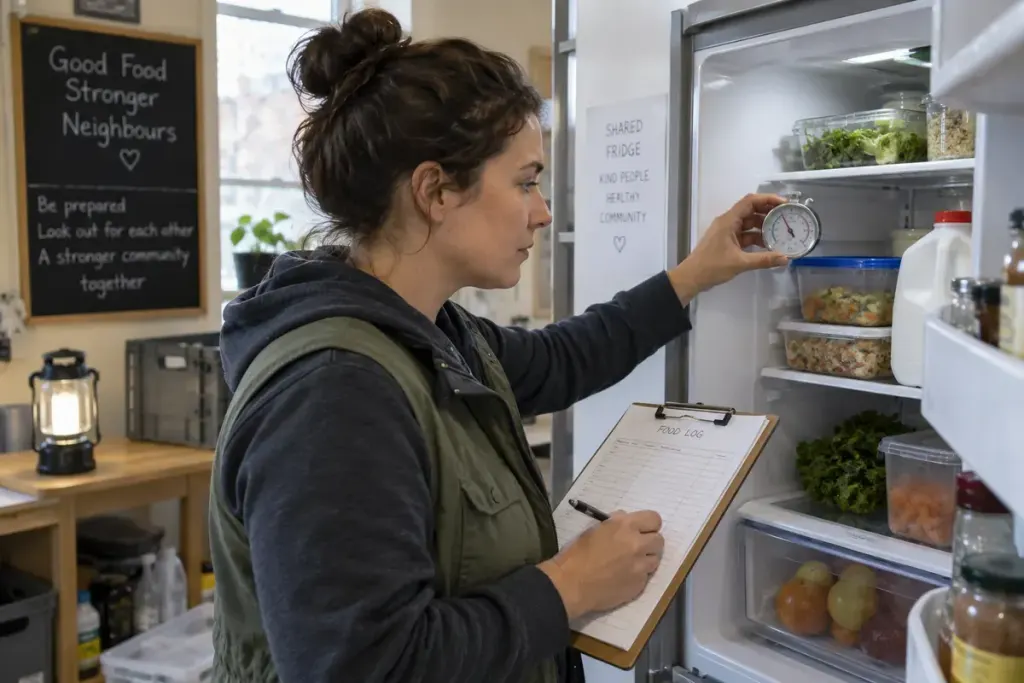
Identify who records when power was lost, checks the available thermometer information and pauses access if necessary. If the outage began while nobody was present, record that uncertainty rather than choosing a convenient start time.
Keep contact details for the project lead and the relevant local food-safety adviser accessible offline. Volunteers should know who can authorise decisions about food and reopening. A person collecting groceries should not be asked to judge an uncertain batch for themselves.
Keep the record with the decision
Document the outage duration, temperatures where available, affected items and the action taken under the applicable guidance. Cooling food again does not erase time spent at unsafe temperatures. Do not mix uncertain items back into normal stock because the electricity has returned.
Use a clear temporary notice explaining whether the fridge is closed and where verified updates will appear. Avoid promising a reopening time before the food and equipment have been assessed.
Afterwards, review whether the thermometer, key access and contact list worked. The point of the procedure is to make a difficult decision traceable and consistent. A shared food project serves people best when uncertainty leads to a careful pause rather than an optimistic assumption.