
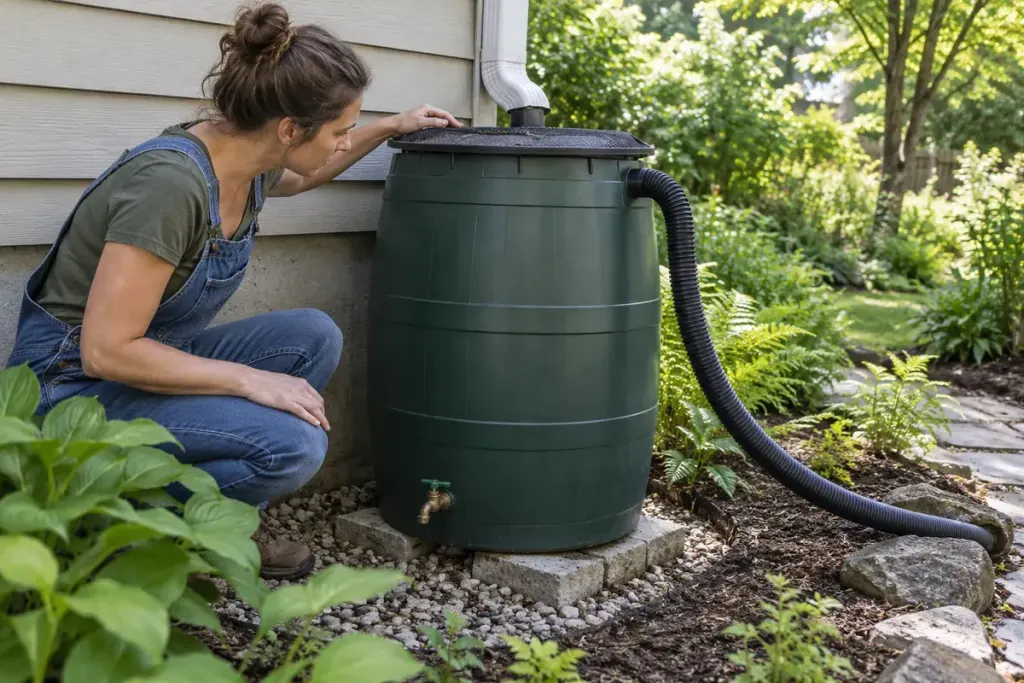
A rain barrel has a capacity; a storm does not stop when that capacity is reached. Before choosing where the container will stand, decide how excess water will leave it without pooling beside the building or creating a problem elsewhere.
The overflow route is part of the installation, not an optional improvement for later. A full barrel can send water back toward the area you were hoping to protect if its outlet is blocked, undersized or badly directed.
Follow the water beyond the barrel
Look at the ground slope, nearby foundations and the route water already takes. Ask where overflow can discharge lawfully and safely on the property. Do not redirect it onto a neighbour’s land, a walking surface or a place where erosion will create another problem.
The US EPA’s rainwater-harvesting guidance includes maintaining screens and overflow components and directing water away from foundations. Local drainage rules and the specific building still determine what arrangement is appropriate.
Plan for a full, heavy container
Use the manufacturer’s installation requirements for a stable base, secure lid and connections. Keep children and animals from accessing the water. If the location or support is uncertain, get competent installation advice rather than balancing the barrel on an improvised stack.
Provide access for inspection. Leaves and debris can accumulate where you least want a restriction, and an outlet hidden behind dense planting is easy to forget. Include the barrel in your seasonal maintenance routine, following the manufacturer’s advice for freezing weather where relevant.
After installation, observe the arrangement during ordinary rainfall from a safe position. Check for leaks, pooling and erosion without entering hazardous weather. Collected roof runoff should not be assumed safe to drink. A useful garden water system is one whose normal use, full condition and maintenance needs have all been considered before the first heavy shower.