
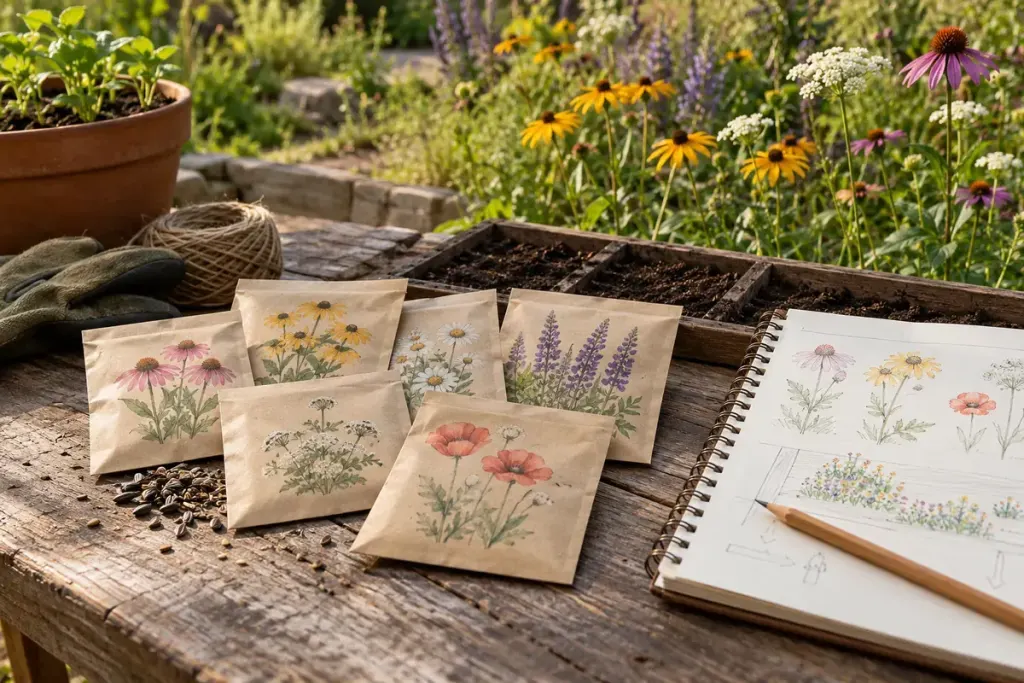
A packet labelled wildflowers can look like a ready-made environmental project. Yet the word does not tell you which species are inside, where they are appropriate or whether the mix will suit the proposed site.
The Royal Horticultural Society’s meadow guidance distinguishes different seed mixes and stresses matching them to site and soil. Its advice is written for a UK context. A community project elsewhere needs locally relevant species information rather than copying that plant list unchanged.
Start with the full list
Ask for scientific names where possible, along with the proportions or composition provided by the supplier. A photograph of a flowering meadow is not an inventory. Check the listed plants against guidance from a local botanical institution, extension service or conservation authority, particularly where invasive species are a concern.
Decide what the project is trying to achieve. A seasonal display, a locally native meadow and a mixed garden for pollinators are not identical projects. Be precise about the aim when explaining the planting to volunteers and neighbours.
Match the plan to the place
Record sunlight, drainage, soil conditions and the maintenance that is realistically available. Obtain the landowner’s permission and check relevant restrictions before sowing on shared or public land. Do not scatter leftover seed in a natural area because it seems wasteful to keep it.
A small trial plot can reveal practical problems before a larger purchase. Label it, record the seed source and observe which plants establish. Agree who will manage weeds, watering during establishment and later cutting, using advice suited to the chosen species.
The strongest community planting plan can explain both what is being planted and why it belongs there. A bright packet is a starting point for that conversation, not evidence that the ecological decisions have already been made.