
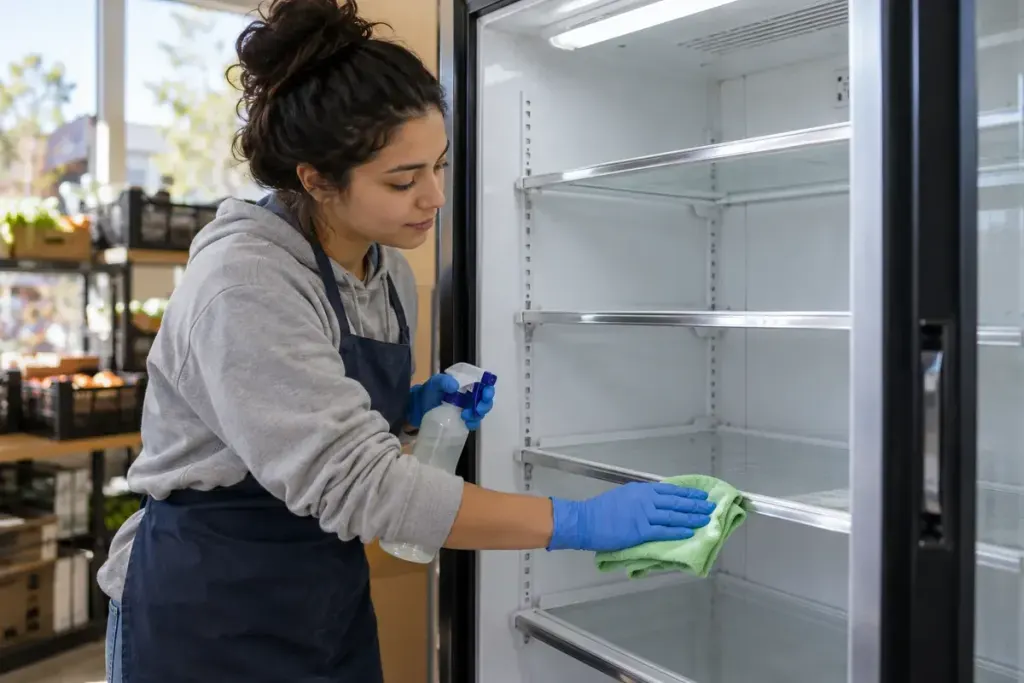
A community fridge can have plenty of donated food and still lack a clear answer to a basic question: who checks and cleans it today? General goodwill is not a substitute for an assigned routine.
Hubbub’s Community Fridge Network supports UK groups operating these projects. Its model is a useful reference, while each organiser still needs procedures that meet local food-safety requirements and the equipment manufacturer’s instructions.
Write the task so someone can carry it out
Name the responsible role, the frequency and the cover arrangement when a volunteer is absent. Specify approved cleaning products and methods, where supplies are stored, and how food is protected during the task. Obtain competent food-hygiene guidance rather than mixing a procedure from unrelated household tips.
Cleaning records should identify the date, person and any problem found. A tick without a defined task can mean different things to different volunteers. Separate cleaning from other necessary checks, such as food acceptance, dates and temperature monitoring.
Give problems a route
What happens if there is a spill, a damaged container, a temperature concern or a product that does not meet the project’s policy? Volunteers need to know whom to contact and when food or the fridge must be taken out of use under the agreed procedure.
Do not ask an untrained volunteer to decide whether questionable food is safe by smell alone. The project’s food-safety plan should determine how uncertain items are handled.
At handover, identify unfinished work explicitly. “Shelf cleaned; damaged container referred to coordinator” is more informative than “all fine” when an issue remains open. Keep private donor or recipient information out of a public cleaning log.
Review the routine after a busy period. If the assigned task regularly cannot be completed, adjust staffing or opening arrangements rather than allowing the checklist to become fictional. A credible community project needs a cleaning record that reflects work actually done.