
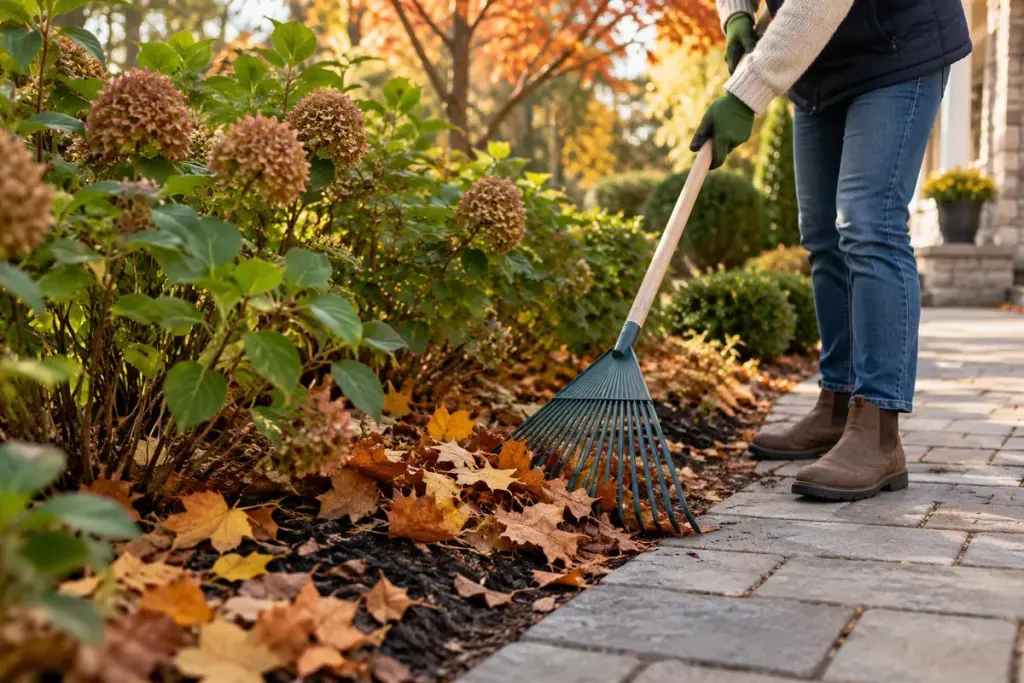
A blanket of fallen leaves does not need the same treatment everywhere. A quiet planting area and the main route to a front door have different jobs. Looking at those jobs first helps you avoid clearing an entire space simply because one path needs attention.
Mark the routes people actually use
Start with entrances, steps and regularly used paths. Check them after wet or windy weather, when leaves may collect again. Keep access usable for people carrying bags, using mobility aids or moving through the space in poor light.
Then look at areas away from those routes. A suitable quiet corner can retain leaf litter as part of a garden habitat. The RHS Welcoming Wildlife garden description includes leaf litter among its small habitat features. That example is a design idea, not a rule that every plant or surface should be covered.
Move leaves with a destination in mind
Before collecting, decide whether suitable material will stay in a designated area, enter an appropriate composting arrangement or go through the local green-waste service. Do not push a path’s leaves into a drain or onto a neighbouring route.
Inspect the material for litter and other hazards, using appropriate tools and protection. If leaves show a plant-disease problem, seek guidance for the affected species rather than assuming all material belongs in the same pile.
- Keep the retained area away from essential access.
- Check that wind does not immediately return leaves to the path.
- Respect the requirements of the plants beneath them.
- Agree maintenance responsibilities in a shared garden.
Take a photograph of the arrangement and review it after the next spell of weather. Did the route stay clear? Did the retained patch remain where intended? Adjust the boundary rather than treating the first attempt as permanent.
The useful outcome is a deliberate division of space: safe access where people need it, and appropriate places where seasonal material can remain.