
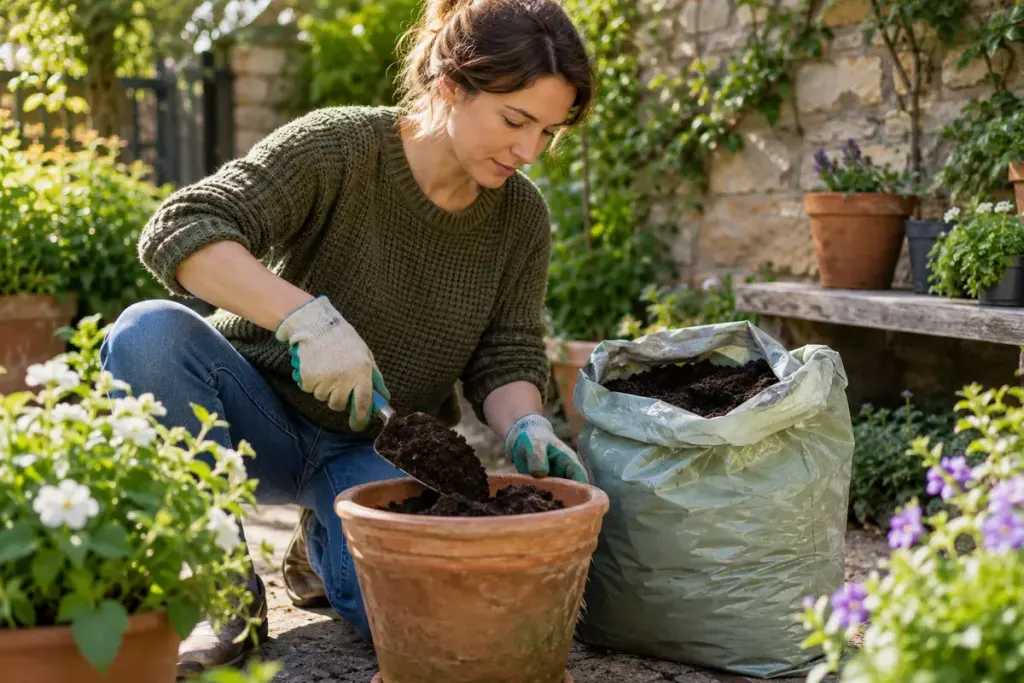
Choosing peat-free compost is a purchasing decision; helping a plant grow in it is an ongoing gardening task. The words on the front of the bag do not tell you everything about how the mix should be used.
Start with the job. Are you sowing seeds, repotting a houseplant or filling a long-term outdoor container? The same bag is not necessarily appropriate for all three. Some plants also need a specialist growing medium.
Read beyond the environmental claim
The RHS guide to peat-free compost explains that blends use different materials and should be selected for the plant and intended use. It also distinguishes potting compost from material used to improve garden soil. “Organic” or a green-looking package does not by itself establish that a product contains no peat.
Read the use, storage and feeding instructions before opening the bag. Keep a photograph of the label so that advice remains available after the packaging is gone. Buy a quantity you can use sensibly rather than storing several opened bags indefinitely.
For a small trial, label the pot with the mix and planting date. Observe the plant and check moisture within the growing medium rather than relying entirely on the surface colour.
Adjust care by observation
The RHS peat-free growing tips note that a surface can look dry while moisture remains lower down. They also caution that care may need to differ from a previous mix. Automatically adding more water or fertiliser can create a new problem.
Keep the container’s drainage and the plant’s needs in view. If growth is disappointing, consider light, temperature, watering and root condition before blaming one ingredient.
A brief record of what you used and how the plant responded helps the next purchase. Sustainable gardening becomes more practical when a suitable material is used well, rather than when a promising label is expected to replace attentive care.