
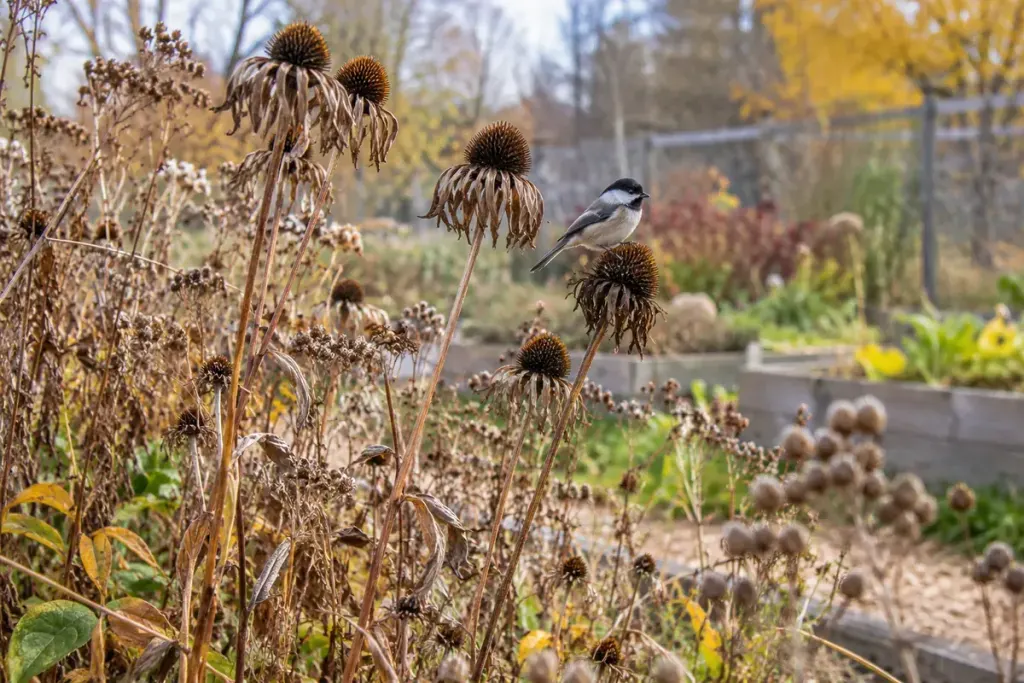
A garden workday often ends with every faded stem cut down. That produces a tidy-looking bed, but it can also remove structures that remain useful after flowering. Some seed heads provide food or shelter for wildlife and give the winter garden texture.
The Royal Horticultural Society’s guide to winter seed heads highlights plants that can be retained for seasonal interest and wildlife. The idea is selective retention, adapted to the plants and conditions in your garden.
Agree what stays before the workday
Walk the beds with the volunteers and mark a few areas to retain. Explain the reason in plain language so someone arriving later does not undo the decision. A small sign saying that stems are being kept for wildlife can also help visitors understand the appearance.
Keep entrances, paths and sightlines clear. A stem that leans into a narrow accessible route may need cutting even if similar stems can remain farther inside the bed. The garden should support both wildlife and the people using it.
Make exceptions deliberately
Do not keep every plant without checking its condition. Diseased material, hazardous growth or plants whose seed spread is a local problem may need different management. Use local horticultural advice when identification or disease is uncertain.
For an informal learning exercise, retain one clearly marked patch and record what you notice over the season. Note birds visiting, stems collapsing or seedlings appearing nearby. These are observations from that patch, not proof that every retained stem has produced the same benefit.
Include the retained areas in the next maintenance plan. Someone needs to decide when spring work is appropriate and how new growth will be protected. “Leave it” works better when followed by a review date than when it means nobody is responsible.
A community garden can look cared for without looking stripped bare. Clear edges, open routes and a visible explanation make intentional seasonal planting easier to recognise. The change is small: before cutting a faded stem, ask whether it has finished every useful job or only the flowering part.