
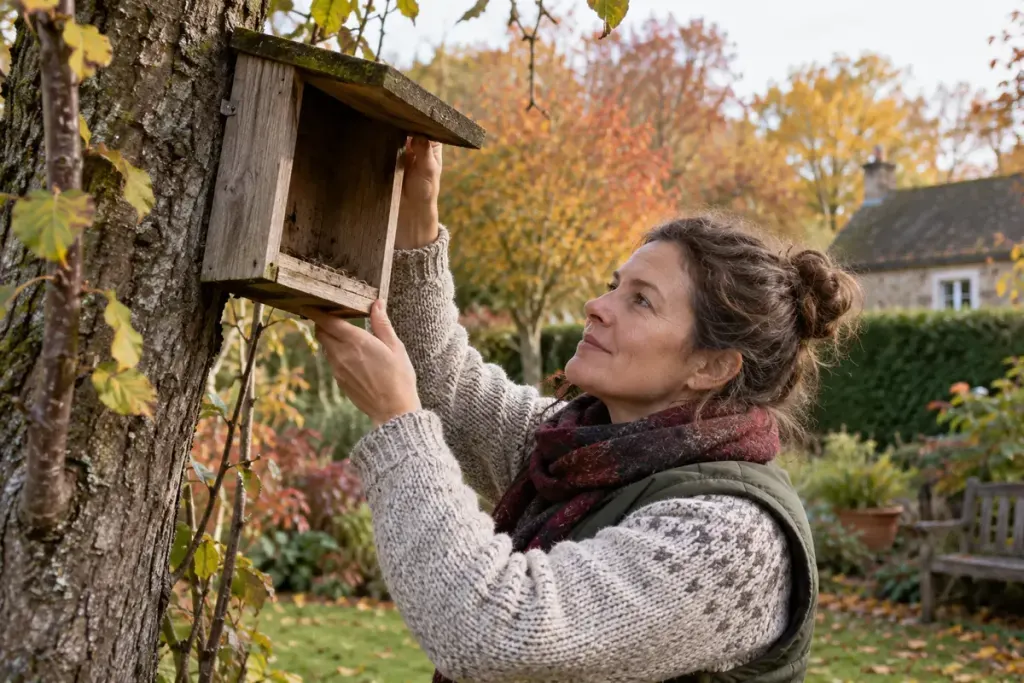
A date in a gardening calendar is a reminder to check a bird box, not proof that its occupants have finished using it. Breeding seasons vary with location and species, and a box can be used later than expected. Maintenance needs to begin with that uncertainty.
The RSPB’s nest-box guide recommends autumn cleaning in its UK context and stresses that the nest must no longer be active. That calendar should not be copied unchanged into another climate or applied to every species.
Separate observation from opening
Watch for activity from a distance and consult appropriate local wildlife guidance before disturbing a box. If you cannot confidently establish that maintenance is permitted and appropriate, leave it alone and seek advice. An apparently quiet box is not a reason to interfere with an active nest.
For a community garden, keep a simple record of the box location, likely occupants, observed activity and the person responsible for maintenance. This reduces the chance that a second volunteer opens a box because they did not know somebody else was monitoring it.
Prepare the maintenance visit
For suitable, empty boxes, the RSPB describes gloves, removal of old material, hot-water cleaning and thorough drying, while advising against insecticides and flea treatments. Follow the box maker’s instructions and local species guidance, including any rules about eggs or protected birds.
Plan safe access as carefully as cleaning. A box beyond comfortable reach may need trained help rather than an improvised ladder arrangement. Record repairs required to the lid, mounting or drainage without making changes that alter the entrance size for the intended species.
The useful result is a maintained habitat with a clear history of care. Cleaning on a rigid date matters less than respecting actual occupancy and making the next inspection informed.