
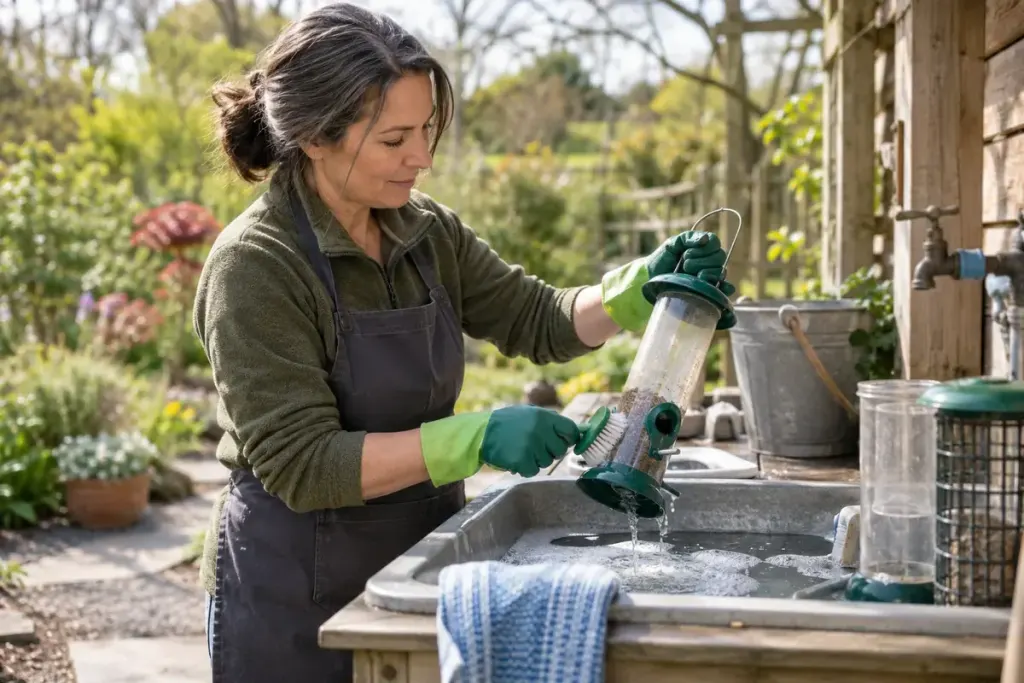
A community garden can have several people willing to refill a bird feeder and nobody clearly responsible for cleaning it. That imbalance matters: adding fresh seed does not remove old food or contamination.
First check current advice for your location, including seasonal feeding guidance and disease alerts. Feeding is not automatically appropriate throughout the year. The RSPB’s garden-bird health guidance is a starting point for UK projects; use the relevant wildlife authority elsewhere.
Assign care, not only refilling
Give one person responsibility for coordinating the routine, with a replacement when they are away. Record when the feeder was cleaned and whether it is currently in use. Keep the record where volunteers will see it before adding food.
The RSPB’s avian-influenza advice includes cleaning feeders outdoors, removing old food, wearing gloves and washing hands afterwards. Use dedicated equipment and follow the current cleaning method and product directions; do not improvise chemical mixtures or use kitchen food-preparation equipment.
Make stopping an available decision
A volunteer should know what to do if sick or dead birds are observed, food becomes spoiled or the cleaning routine cannot be maintained. Follow current wildlife guidance on reporting and whether to suspend feeding. Do not handle sick or dead wildlife casually or assume that cleaning alone resolves every disease concern.
An illustrative handover note might say: “Feeder removed today; do not refill until the coordinator checks the current guidance.” That is clearer than leaving an empty feeder in place and hoping everyone understands why.
Review the location too. Can the feeder be reached for maintenance without unsafe access, and can the ground beneath be managed? A difficult-to-clean design may create work that the group cannot reliably sustain.
Supporting wildlife is an ongoing responsibility. The project should be able to explain not only what food it provides, but who checks whether providing it remains appropriate.