
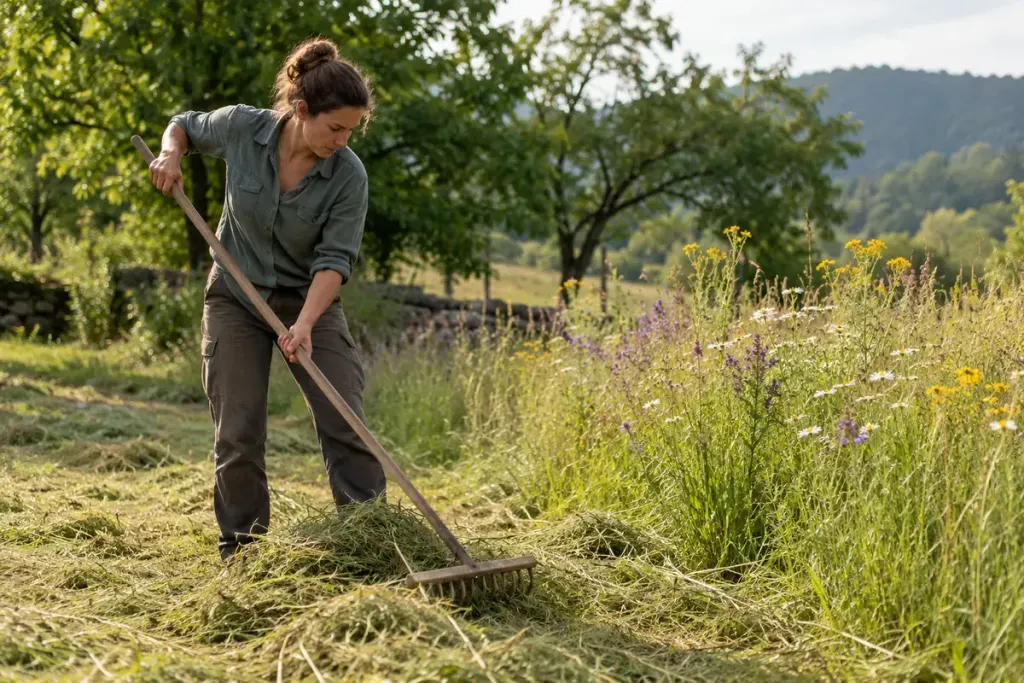
The photographs of a new meadow usually show flowers. The maintenance plan needs to show where the cut grass will go. If a group budgets only for mowing, it may leave a thick layer of material over the very plants it hoped to encourage.
The Royal Horticultural Society’s meadow-maintenance guidance includes removing cut material as part of managing fertility and vegetation. The timing and approach depend on the type of meadow and local conditions; a single calendar date copied from another region is not a complete plan.
Plan the collection alongside the cut
Decide who will rake, how the material will be moved and where it can appropriately be taken. Check local composting or green-waste arrangements rather than dumping cuttings at a hedge or watercourse. Consider the access needed by volunteers and equipment without damaging sensitive areas.
Plantlife’s garden-meadow guide also explains the importance of removing arisings. Some management methods allow cut material to lie briefly so seeds can fall before collection. Follow advice for the actual planting and site rather than treating that interval as permission to abandon the cuttings indefinitely.
Keep a refuge and check the living occupants
Before work, assess the patch for wildlife and relevant local protections. Seek ecological advice where needed. Staggered cutting or an uncut area may form part of the site’s management, but the arrangement should suit the species present rather than being a decorative strip chosen at random.
A small community project can keep a record of the cut date, areas left standing, collection date and notable observations. That creates something useful for next year’s volunteers to compare with the plants that return.
Explain the maintenance to neighbours too. A temporary change from flowers to a shorter patch can look like neglect or damage if nobody knows the plan. A concise sign describing the work and its timing is more helpful than promising that every season will look identical.
The meadow succeeds through repeated care appropriate to its place. Removing the cut material is one of the less photogenic jobs that makes the next flowering season possible.