
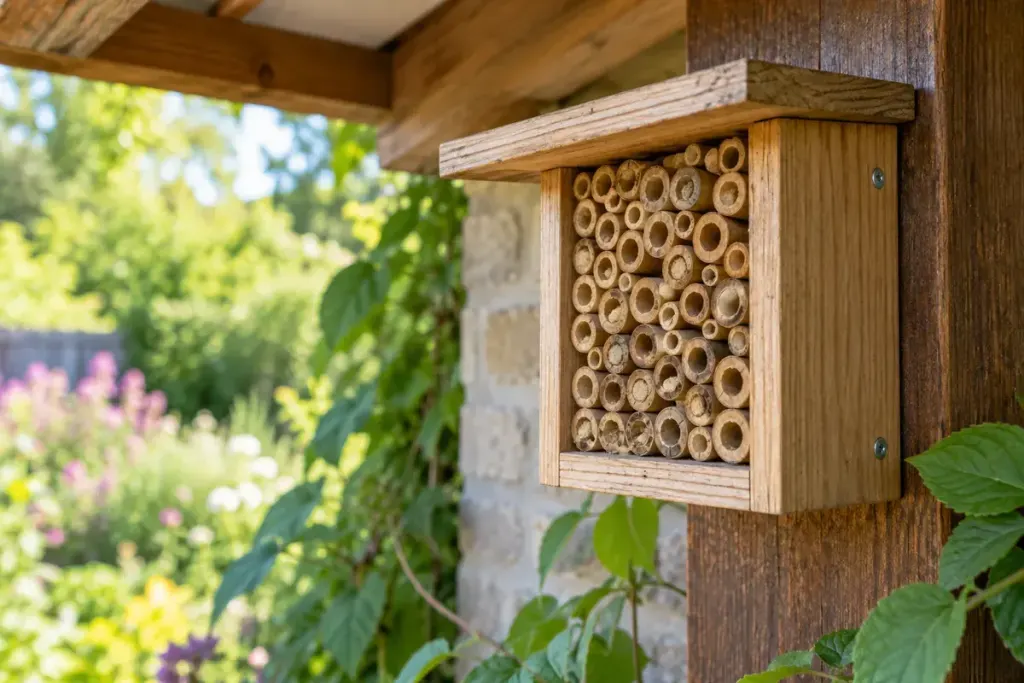
An insect hotel can look attractive on the day it is installed, then become damp, loose or blocked by growth. Its usefulness depends on the spaces inside and the conditions around them, rather than on how many decorative compartments fit into the frame.
First identify which wildlife the design is intended to support. Some solitary bees use dry cavities or stems; they do not all share the same nesting habits. The RHS guide to leaf-cutting bees describes how some species use cavities, including suitable bee hotels.
Inspect the shelter from the outside
Check that the structure is secure, protected from persistent wetting and not becoming hidden behind plant growth. Look for loose tubes or damage. The RHS’s seasonal pollinator advice includes inspecting bee hotels and keeping entrances accessible.
Do not pull apart sealed or occupied nesting spaces to see what is inside. A blocked-looking entrance may be part of a nest rather than debris to remove. Photograph changes from a respectful distance and seek species-appropriate guidance if you cannot tell.
Plan for care before adding another hotel
Choose a design whose maintenance requirements you understand. Ask how empty nesting materials are replaced or cleaned, when that work is appropriate locally and how occupied nests are protected. Avoid applying a single calendar date to every climate and species.
In a community garden, assign a named person to the inspection record. Note the date, visible condition and any action needed without claiming to count residents from the number of plugged holes alone.
Keep the surrounding habitat in view too. A nesting structure is one small feature within a garden, alongside flowers, suitable plant stems and other shelter. It should not become an excuse to remove all natural habitat in favour of a single tidy display.
A modest structure that stays suitable and receives informed care is a more useful commitment than a large installation nobody knows how to maintain.