
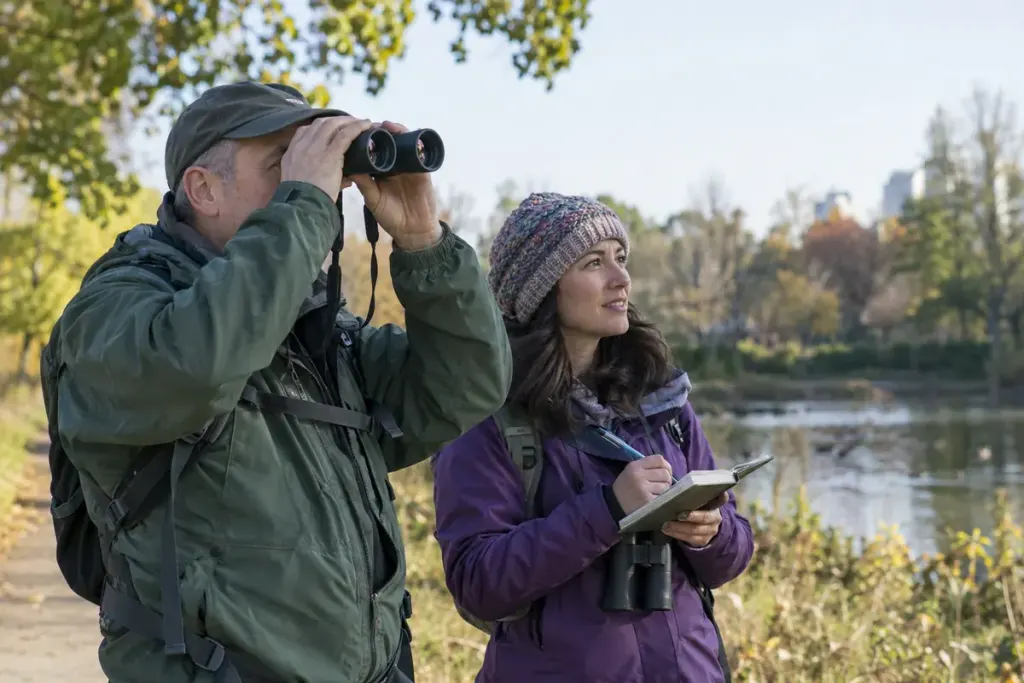
Three volunteers watch the same blackbird move from a fence to a tree and then a lawn. If each person adds one bird to a shared total, the record may show three birds where only one was present. A community count needs a counting rule before it needs a colourful results poster.
The RSPB’s Big Garden Birdwatch instructions offer one specific example: record the highest number of each species seen at one time rather than adding every sighting during the hour. That rule belongs to that survey’s method. If your group contributes to another programme, use its protocol instead of combining several approaches.
Agree the observation unit
Are volunteers producing one shared count for a garden, separate counts for distinct sites or a timed route record? Decide this first. Give each location a clear boundary and record the observation period. Otherwise two careful observers may still create incompatible data.
For a shared garden count, nominate someone to maintain the agreed tally while others help identify birds. Call out movements and uncertainty rather than silently adding entries. If a bird leaves one observer’s view and enters another’s, discuss whether it is likely to be the same individual within the chosen method.
Keep uncertain identifications marked as uncertain. A blurred glimpse should not become a confident species record simply because the spreadsheet requires a name. Follow the programme’s instructions for unidentified birds and for birds merely flying over.
Record the conditions that help interpret the session: start and finish, site, weather notes and any interruption. Avoid changing the protocol halfway through because a larger total would look more impressive. A modest count collected consistently is more useful than a dramatic number produced by overlapping observations.
Before submitting, have another volunteer read the record against the agreed instructions. Preserve the original notes as well as the final total. The group’s most valuable contribution is not just enthusiasm; it is an observation another person can understand and use.