
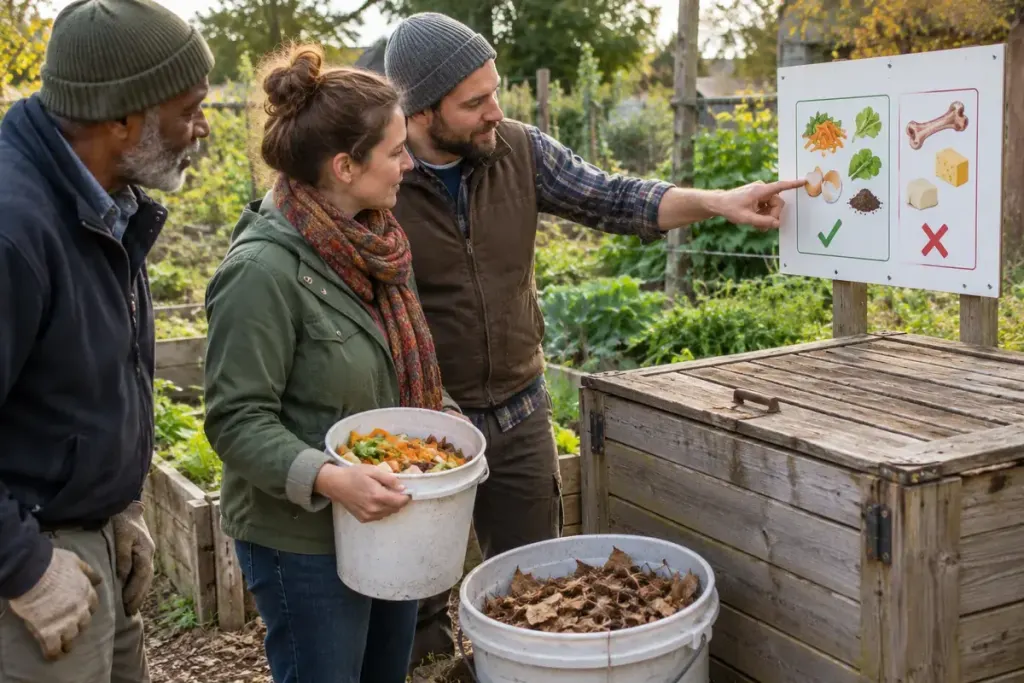
A shared compost bin receives an apple core, a takeaway container and a bag labelled compostable. All three donors may believe they are helping, but the system may accept only one of those items. The sign needs to describe the actual process, not the broad idea of composting.
Decide what the system can handle
Agree the accepted materials with the people managing the bin and the relevant site rules. The US EPA’s home-composting guide distinguishes suitable ingredients from items that can cause problems in an ordinary backyard setup. A community scheme may use a different process, so do not copy another project’s list without checking.
Packaging described as compostable is not automatically suitable for a small garden bin. Confirm the requirements for the specific material and process. If it is not accepted, say so directly instead of leaving contributors to interpret a symbol.
Make the sign answer a quick question
Use a short accepted list and a short excluded list with clear examples. Place the sign where someone decides what to deposit. A photograph or simple illustration can help, but it should match the written rule rather than introduce a different category.
For a fictional scheme accepting selected plant scraps, the sign might name fruit and vegetable peelings while directing people to keep packaging out. The actual list must come from the scheme’s manager, including any local restrictions.
Assign the work behind the invitation
Name the person or rota responsible for checking deposits, maintaining the system and updating instructions. Provide a way to ask about an uncertain item before depositing it. Do not leave contributors to remove unknown or hazardous contamination themselves.
Review repeated mistakes without shaming individual users. If the same excluded item appears often, the sign or nearby disposal options may need improvement. A shared bin works when the invitation to contribute is supported by a process someone can maintain.