
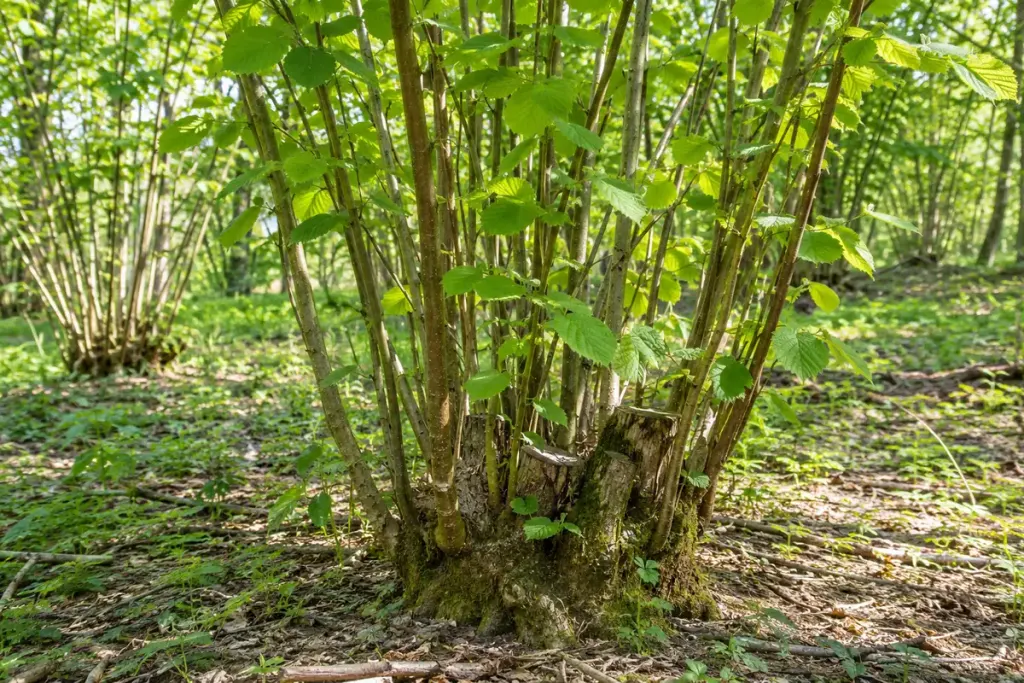
A recently cut patch of woodland can look unfinished beside taller trees. In an established coppice, however, the low bases may be the beginning of the next stage rather than the remains of abandoned felling.
Coppicing is a management system in which suitable trees are cut close to the ground and allowed to regrow from the base, known as the stool. The Woodland Trust’s management guide explains how the new stems form and how the cutting cycle depends on the species and intended products.
The cycle matters more than one photograph
A single view shows only one moment. A functioning plan considers when different areas were cut, how regrowth is developing, and what protection or follow-up is needed. The value of the work cannot be judged solely by whether a patch looks tidy immediately afterwards.
For a community woodland visit, ask the manager to identify a recently cut area and an older regrowth area. Compare the number of stems emerging from the bases, the light reaching the ground, and the recorded stage of each area. Keep your observations separate from claims about biodiversity that would need a more systematic survey.
Ask about the purpose before volunteering
Useful questions include which species are being managed, what the material will be used for, and how the next cycle is planned. A hazel project producing usable poles may have different requirements from a scheme with another species or objective.
Do not copy a cutting interval from a general article onto an unfamiliar tree. Tree condition, site history, wildlife, legal requirements, and the management objective all belong in the decision. Cutting work needs permission, suitable competence, and the project’s safety arrangements.
Volunteers can also contribute through recording, checking agreed protection measures, or helping with material handling under supervision. Not every useful role involves a saw.
A small dated map of the managed areas can make future visits much more informative. It lets the community follow regrowth as a process, rather than repeatedly reacting to the appearance of one newly cut patch.