
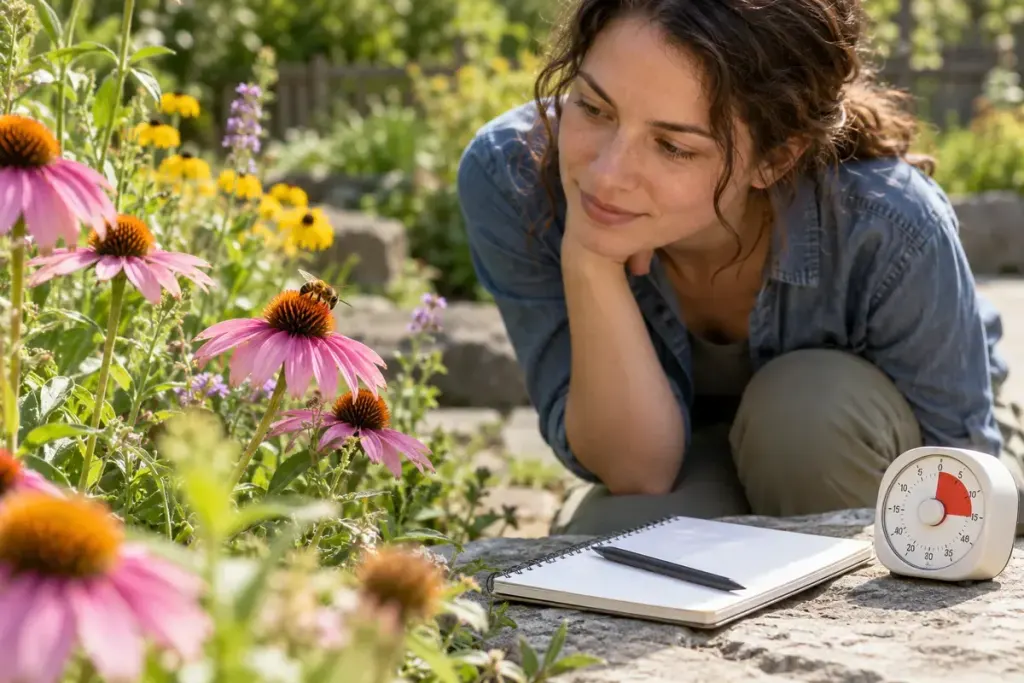
One volunteer watches flowers for five minutes and sees two insects. Another stays for half an hour and sees nine. The second number is larger, but the observations are not directly comparable. A shared method matters before a community group starts drawing conclusions.
Choose a protocol before counting
The UK Pollinator Monitoring Scheme offers Flower-Insect Timed Counts using a ten-minute observation period. Its guidance specifies the patch, conditions and information to record. If you want to contribute to a monitoring scheme, follow its current instructions rather than creating a similar-looking method and assuming the results will be accepted.
Outside that scheme’s scope, look for a suitable local programme or describe your exercise honestly as an informal observation. A school garden count can be valuable without being presented as official monitoring data.
Record the conditions alongside the number
Use the required patch and observation window consistently. Note the date, time, flowers and weather information requested by the protocol. Identify insects only to the level you can support. An uncertain category is better than a confident species name guessed from a quick glimpse.
Agree how the group handles an insect that leaves and returns. Follow the scheme’s counting definition; do not have each volunteer invent a different rule. Practise together briefly so everyone understands what counts as an observation.
Keep people on safe, permitted ground and avoid disturbing nests or handling insects. The activity is watching, not collecting. Give children suitable supervision and a role that matches their ability to observe and record.
When sharing results, report the effort and conditions with the count. One quiet session does not prove that pollinators have disappeared, and one busy patch does not establish a neighbourhood trend. Repeated, comparable observations can support better questions over time. The first achievement is a record another person can understand and repeat.