
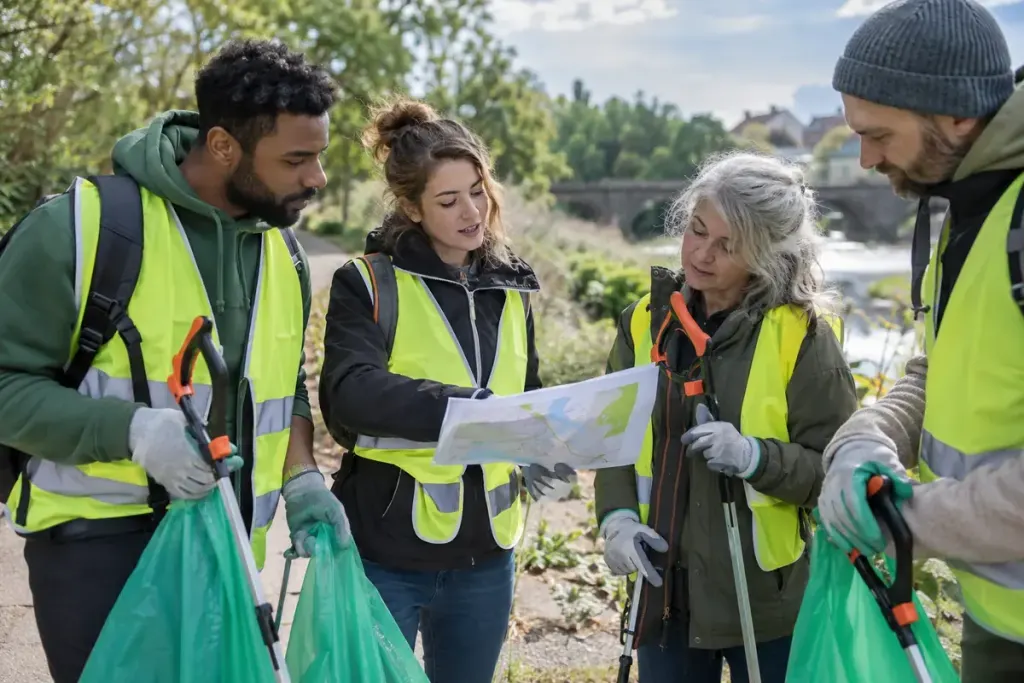
A community clean-up is not a promise to collect everything found on the route. Some items need trained handling or a specialist collection service. Volunteers should know that boundary before anyone feels pressure to clear a difficult patch of ground.
Choose a suitable route, assess its risks and agree with the landowner or relevant authority how ordinary collected waste will be removed. Include a separate reporting process for hazards that remain in place.
Make “leave it” an explicit instruction
Birmingham City Council’s volunteer guidance tells participants not to handle needles or sharp objects and to report needles to the council. Other authorities have their own reporting arrangements; use the service responsible for your location.
Brief the group about unknown containers, suspected hazardous waste and anything outside the agreed scope. Gloves and grabbers do not turn an unfamiliar substance into ordinary litter. Do not open containers, sort suspicious contents or ask a volunteer to improvise a disposal method.
Give reports a clear route
Name the coordinator to contact and agree how to describe a location without approaching the object. A nearby landmark, route section or accurate map position can help. Keep people away as appropriate and follow the local authority’s instructions.
For an illustrative briefing, a volunteer who sees an unidentified container beside a hedge would stop work in that immediate area, alert the coordinator and move to a safe section. The coordinator would record and report the location through the agreed channel.
Close the loop after the event
Keep a short record of reported hazards, the authority contacted and any reference number. Assign follow-up rather than leaving the next group to discover the same item without context. Avoid publishing photographs that reveal personal information in discarded documents.
A successful litter pick leaves volunteers clear about what they can safely do and what requires someone else. Reporting an unsuitable item is a useful outcome, even when it does not add another bag to the final count.