
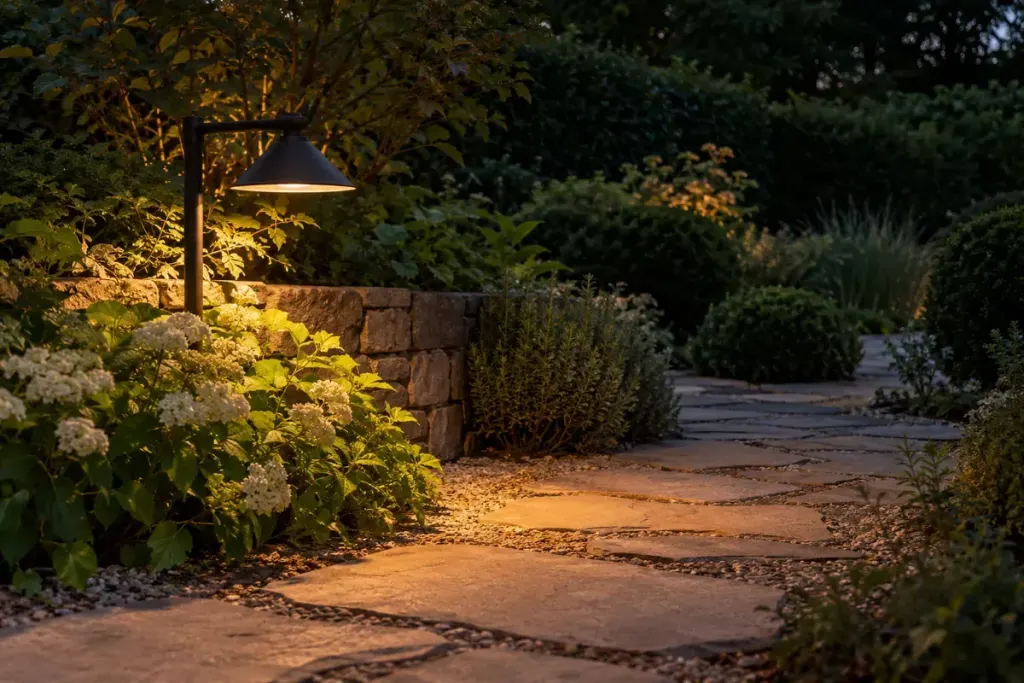
A garden lamp can illuminate a doorway, a hedge, a neighbour’s window and the sky at the same time. Only one of those may be its intended job. Improving outdoor lighting begins by deciding exactly what people need to see.
DarkSky and the Illuminating Engineering Society’s lighting principles recommend useful, targeted, low-level, controlled and warm-coloured light. These principles work together; choosing a warmer bulb does not make unnecessary all-night lighting harmless.
Walk the route before choosing the fixture
Identify steps, changes of level, locks and other places where visibility matters. Then look from the boundary of the space. Is the source glaring into someone’s eyes? Does it shine beyond the area it is meant to serve?
An illustrative improvement might move a lamp from a high, outward-facing position to a shielded fitting that directs light onto the entrance. That is a design idea, not a universal installation instruction. Electrical work and public-access requirements still need appropriate professional advice.
Match the operating time to the use
A timer or suitable sensor can reduce hours of unnecessary illumination, but test the result with the people who use the space. Someone moving slowly should not be left in darkness because the control assumes everyone crosses the path quickly. Keep essential accessibility and safety needs in the design.
Photograph the same view before and after a change, using comparable camera settings. Also record where the light falls and how long it runs. A photograph alone can make a dim scene look bright through automatic exposure, so the written observations matter.
Leave the rest of the garden dark
A lit route does not require every shrub and tree to be highlighted. Preserving darker areas is a practical way to limit disturbance while still serving people. Review the arrangement when plants grow or the use of the space changes, rather than treating the first installation as a permanent answer.