
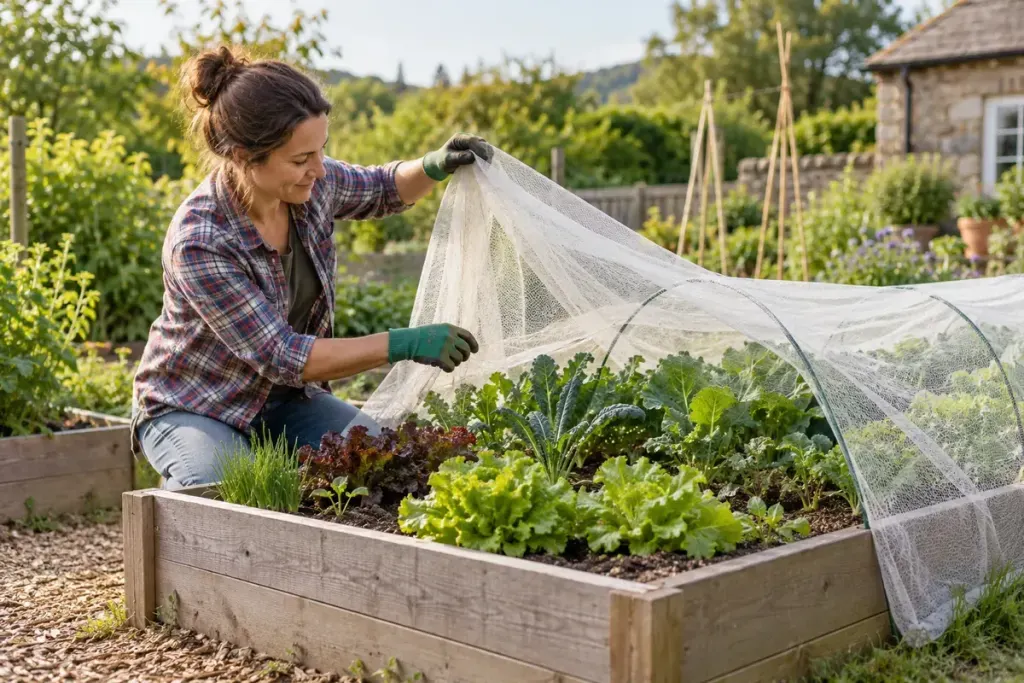
A piece of netting left beside a vegetable bed can look harmless because it is no longer covering anything. To a small animal moving through the garden, loose folds and loops can still be a trap.
The RSPCA’s wildlife-friendly gardening guidance highlights the risk of animals becoming tangled in netting. In a shared garden, responsibility for checking it should be as clear as responsibility for watering.
Inspect the whole arrangement
Look at the edges, corners and unused material, not only the top of a crop cover. Notice slack sections near the ground, torn areas and pieces stored where wildlife can enter them. Avoid assuming that a tidy view from the path means every side is secure.
Ask whether a different crop-protection method would suit the site. Rigid barriers and well-designed structures may avoid some problems created by loose flexible material, but their suitability depends on the crop and wildlife involved. Seek local wildlife advice before choosing a system.
Give checks an owner
For a community plot, assign a named role and a routine for inspections, including after wind or maintenance. Record damaged equipment so it is not quietly returned to use by the next volunteer.
Remove redundant netting and store it securely. Do not leave a partly dismantled cover overnight as an unfinished job. Check carefully before moving material in case an animal is already caught.
If you find entangled wildlife, contact an appropriate wildlife rescue or veterinary service promptly for instructions. Pulling the animal or cutting blindly can cause further injury, and an apparently freed animal may still need assessment.
Crop protection should be reviewed as the garden changes. A cover that fitted neatly around small plants can develop gaps or loose sections later. A short, regular inspection is more useful than relying on the care taken at installation.