
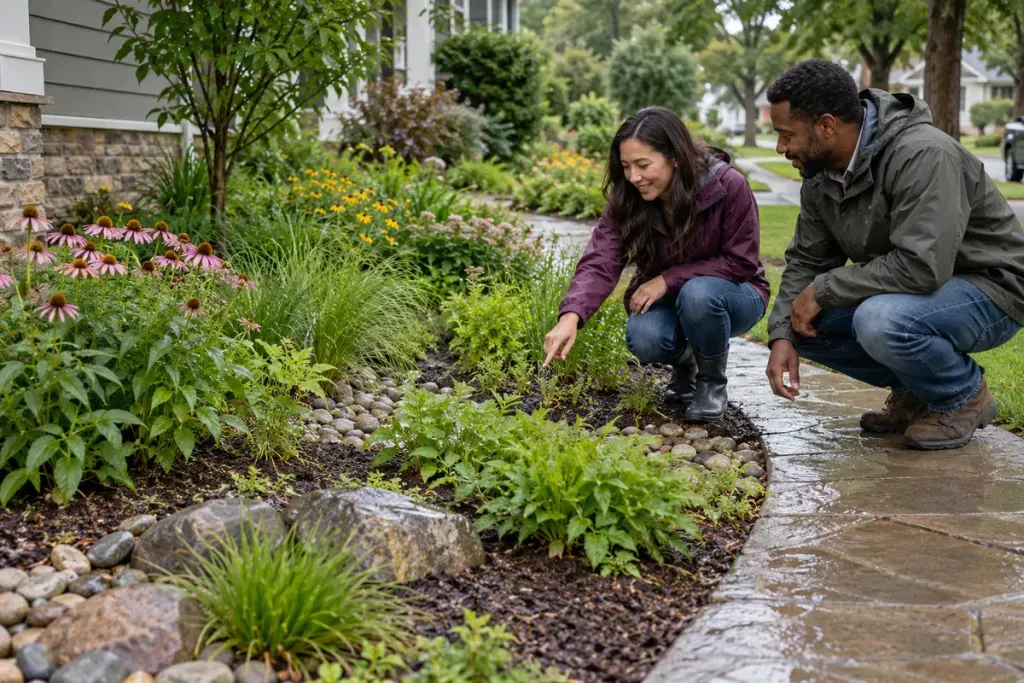
A rain garden is designed to receive runoff, hold it temporarily, and let it soak into suitable ground. If it remains a small pond between storms, the problem may be the site or design rather than the choice of flowers.
The University of Minnesota Extension’s rain-garden guidance discusses soil drainage and site selection. Its local examples should not be treated as universal dimensions or setbacks. Ground conditions, buildings, utilities, and local drainage requirements need assessment for the actual property.
Observe where the water comes from and goes
Before digging, sketch the runoff source, the proposed garden, nearby structures, and the route water could take if the garden fills. A downpipe that serves a large roof can deliver more water than a small decorative hollow was intended to manage.
Record what happens after rain from a safe location. Note when water arrives and whether it drains between events. Label observations with dates instead of relying on the impression that the area is “usually dry.” Persistent water deserves investigation by someone qualified to assess drainage.
Do not simply deepen the depression to hide an overflow problem. Digging can encounter utilities, unsuitable soil, or groundwater, and sending water towards a neighbour or foundation can create another problem. Check local requirements and utility-location procedures before any excavation.
For a community project, assign responsibility for inspection and maintenance as well as planting day. A short record of sediment, blocked inlets, plant condition, and drainage observations helps the next volunteer understand what has changed.
The planting can be attractive, but the water behaviour is the essential test. A successful plan connects the incoming runoff, temporary storage, infiltration, and safe overflow route into one design suited to the place.