
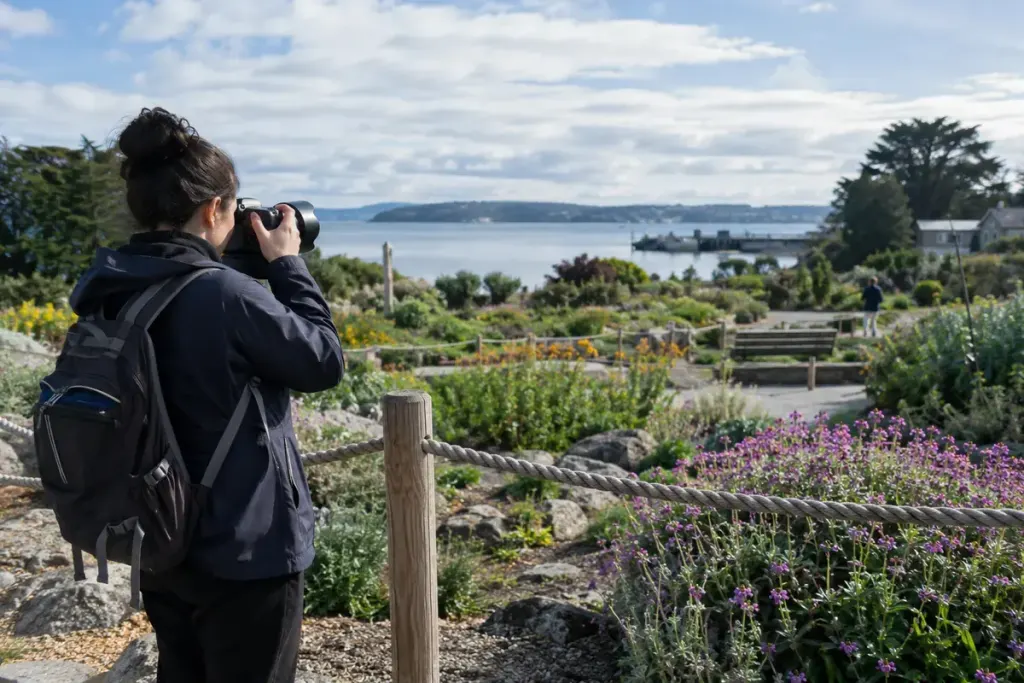
A before-and-after photograph can make a community project easy to understand. It can also exaggerate change if the second image uses a different angle, season or crop. A repeat-photography routine gives the comparison a more honest foundation.
Choose a viewpoint you can use again
Select a safe, permitted position with a stable reference: a path corner, doorway or other fixed feature. Record the approximate camera height, direction and framing. Avoid a location that requires standing in traffic or entering private space.
For an illustrative garden project, include the same bed edges and background feature each time. Keep the original files and record the date, approximate time and relevant conditions. If a tree or building later blocks the view, explain the change instead of presenting a new angle as directly equivalent.
Photograph the question you are tracking
Decide what the images can show: whether a path is clear, where planting has established or how a shared space is arranged. A photograph cannot by itself measure biodiversity, air quality, carbon savings or community wellbeing. Those claims need suitable methods and evidence.
Take a wider context image as well as any detail shot. A close-up of healthy plants may hide empty areas; a distant view may hide maintenance problems. Keep unsuccessful or unfinished sections in the record rather than selecting only the most attractive outcome.
Respect privacy. Avoid identifiable people where they are unnecessary, and follow the project’s consent arrangements when people are included. Do not publish private addresses, vehicle details or sensitive locations casually.
At the next review, place the images beside a short activity log: what was done, when and what still needs attention. Invite participants to explain differences the camera cannot capture. The result is a usable project record, with photographs supporting the account rather than carrying claims they cannot prove.