
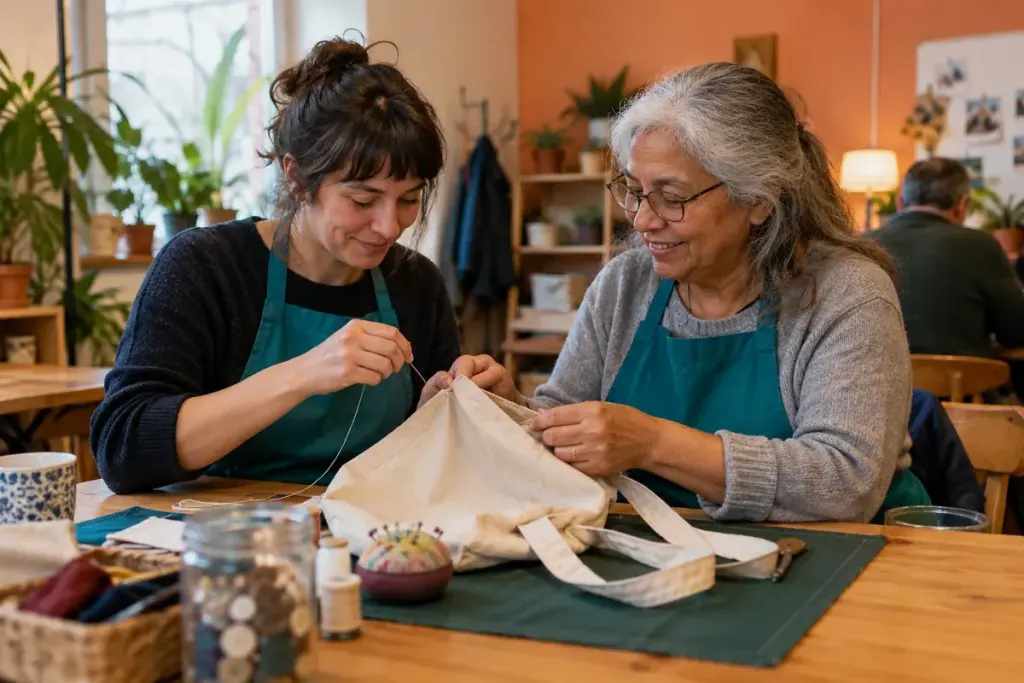
A poster inviting people to “bring anything broken” sounds generous. It can also leave volunteers facing jobs they cannot safely assess, a queue of disappointed visitors and no clear way to say what the session can actually offer.
A small community repair activity benefits from a narrower promise. Start with the skills, venue and support you genuinely have, then describe the session around those. A mending table for simple textile repairs is a different undertaking from an event accepting electrical appliances.
Choose a scope that matches the people available
Ask prospective volunteers which tasks they can confidently demonstrate and which they will decline. Establish those limits before writing the invitation. Check venue requirements, insurance, safeguarding and any local rules relevant to the activity.
Repair Café International describes a model in which visitors and skilled volunteers work on repairs together. That emphasis on shared learning is useful. If you want to use its name or join its network, follow the organisation’s own guidance rather than assuming any repair event is affiliated.
Explain what someone should bring
For a hypothetical textile session, the invitation could ask for a clean garment or bag, a description of the problem and any matching spare material the visitor already has. Say which repairs are outside the session’s scope, how long the event lasts and whether places are limited.
Avoid promising that every item will be repaired. Some need parts, different equipment or professional assessment. Being explicit about that possibility respects the visitor’s time and makes it easier for volunteers to explain a limit without embarrassment.
Make the first conversation practical
Arrange a simple arrival point where someone can describe their item before joining a work table. Ask what they want to learn and whether they would like to participate. Keep needles, scissors and other tools under appropriate supervision, with a plan suited to the people attending.
Provide an alternative role for someone who wants to help but cannot do the repair itself. They might organise materials, record non-personal outcomes or explain the queue. Participation does not need to mean that everyone performs the same task.
Use an honest outcome record
A short tally can distinguish repaired, partly repaired, needs a part and referred elsewhere. Record the reason an item could not be completed, without collecting unnecessary personal information. These notes help determine what skills or materials would improve the next session.
Do not turn the number of visitors into an unsupported claim about waste or carbon saved. If you want environmental impact estimates, use a transparent method and explain its limits. A small event can be worthwhile without inventing a dramatic statistic.
End with something the visitor can use
Where appropriate, write down the repair completed, a part still needed or a question for a qualified specialist. Return the item and any components together. Make sure nobody leaves believing an unfinished or unassessed repair has been certified safe.
After packing up, ask volunteers which tasks fitted the session and which caused difficulty. The next invitation can then be clearer. A modest promise fulfilled well is a stronger foundation for a recurring activity than an unlimited offer the group cannot support.
For a different kind of local project, try a careful observation of neighbourhood shade.